How Much Does Air Conditioning Actually Cost to Run? (The Per-Hour Maths Will Surprise You)
Last July, my electricity bill nearly doubled. I blamed the air conditioner — obviously — but I had no idea whether running it cost me 50 cents an hour or 5 dollars an hour. So I did what most people do: I felt vaguely guilty every time I turned it on, suffered through a few unnecessarily sweaty afternoons, and never actually checked.
When I finally sat down and did the maths, two things surprised me. First, my central AC was costing far more per hour than I'd assumed. Second, almost everything else I'd been feeling guilty about — the fan running all night, the TV, the laptop charger — cost almost nothing.
This article shows you how to calculate exactly what your air conditioning costs to run, using the same kilowatt-hour formula your utility company uses to bill you. By the end, you'll be able to put a real dollar (or pound) figure on every appliance in your home — or skip the manual maths entirely with the Electricity Cost Calculator.
How Much Does It Cost to Run an Air Conditioner?
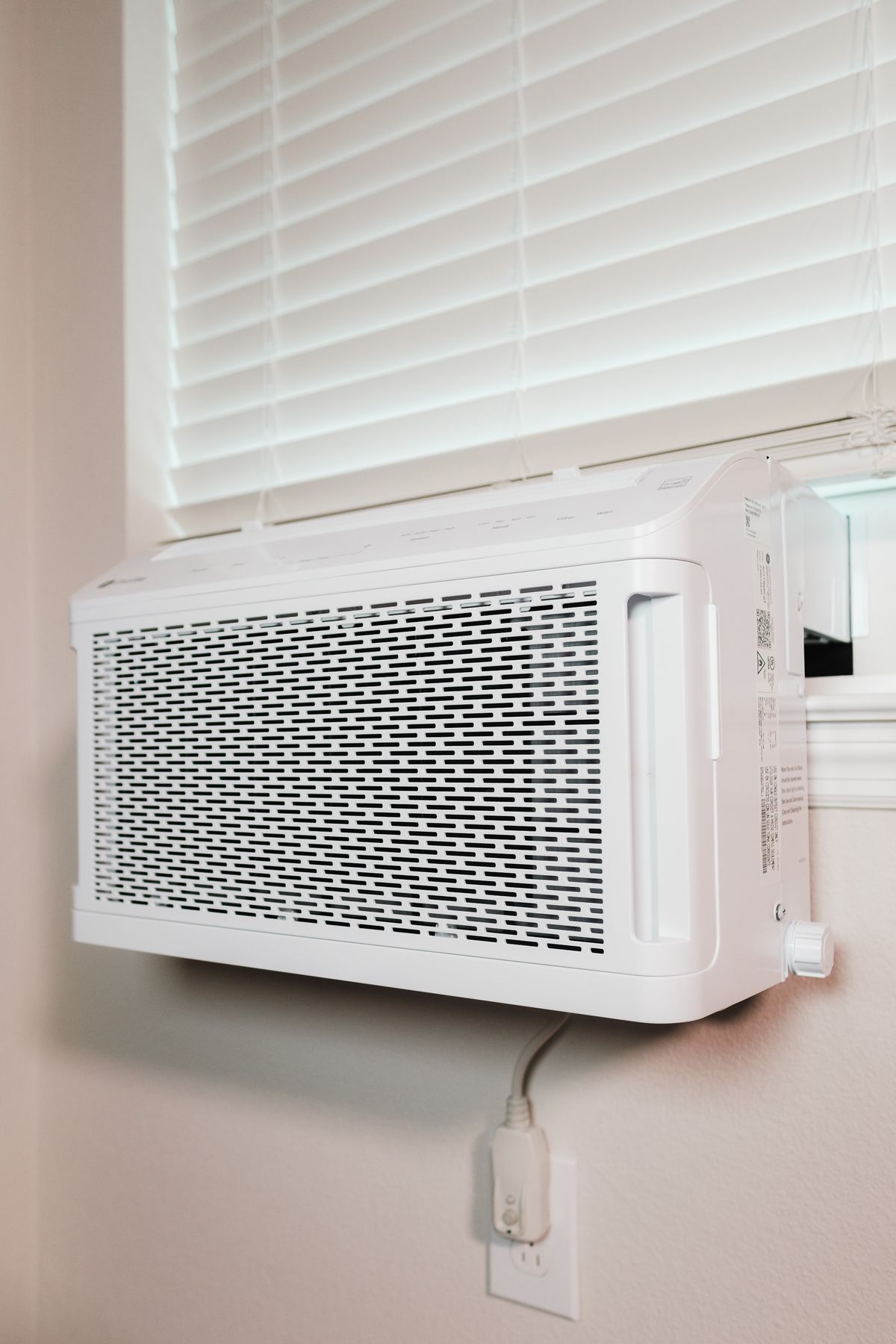
A central air conditioner drawing 3,500 watts costs roughly $0.60 per hour to run at the average US residential electricity rate of about 17 cents per kilowatt-hour. Run for 8 hours a day, that's around $145 per month — typically the single largest line on a summer electricity bill.
The wide range you see in online answers — "AC costs $0.06 to $0.88 per hour!" — isn't evasion. It's because three variables genuinely change the answer by an order of magnitude:
- The type of unit. A small window unit might draw 500 watts. A whole-home central system can draw 3,000–4,000 watts. A simple electric fan draws 50–75 watts — about 1% of central AC.
- Your electricity rate. The US average is around 17¢/kWh, but Californians pay over 30¢ while parts of the South pay under 12¢. In the UK, the Ofgem price cap put the average at roughly 26p/kWh in 2025 — significantly higher than most US rates.
- Hours of actual compressor runtime. An AC that cycles on and off runs its compressor far fewer hours than the thermostat schedule suggests.
According to the US Energy Information Administration's Residential Energy Consumption Survey, air conditioning accounts for about 19% of electricity use in the average American home — and far more than that during peak summer months in hot climates.
The kWh Formula Behind Every Electricity Bill
Your utility company bills you in kilowatt-hours, and the conversion from any appliance to a cost is two steps of arithmetic:
Cost = kWh × Rate per kWh
That's the whole secret. Every "how much does X cost to run" question is this formula with different numbers plugged in.
Worked example — US central AC: A 3,500-watt central air conditioner running 8 hours a day, at the US average rate of $0.17/kWh:
- Daily energy: 3,500 × 8 ÷ 1,000 = 28 kWh
- Daily cost: 28 × $0.17 = $4.76
- Monthly cost (30 days): about $143
Worked example — UK portable AC: A 1,000-watt portable air conditioner running 6 hours a day, at the UK average of £0.26/kWh:
- Daily energy: 1,000 × 6 ÷ 1,000 = 6 kWh
- Daily cost: 6 × £0.26 = £1.56
- Monthly cost: about £47
And the comparison that changed my behaviour — a fan: A 60-watt pedestal fan running 8 hours costs 0.48 kWh × $0.17 = about 8 cents a day. You could run that fan all summer for less than the AC costs in two days.
The wattage is printed on a label on almost every appliance (or in the manual, or on the plug brick). Once you have it, the Electricity Cost Calculator does the daily, monthly, and annual cost in one go — it also has preset wattages for common appliances if you can't find the label.
Key Takeaway
Electricity cost is always Watts × Hours ÷ 1,000 × your rate per kWh. The number that matters most is wattage: a 3,500W central AC costs roughly 60 times more per hour than a 60W fan. Knowing each appliance's wattage tells you where your money is actually going.

Which Appliances Actually Drive Your Summer Bill?
Most of us carry around a mental ranking of "expensive" appliances that's years out of date or just wrong. Here's what the formula says, using typical wattages and the US average rate of $0.17/kWh:
| Appliance | Typical Wattage | Cost per Hour | Monthly (8h/day) |
|---|---|---|---|
| Central AC | 3,500 W | $0.60 | ~$143 |
| Window AC | 1,000 W | $0.17 | ~$41 |
| Dehumidifier | 500 W | $0.09 | ~$20 |
| Refrigerator* | 150 W | $0.03 | ~$18 |
| Pedestal fan | 60 W | $0.01 | ~$2.45 |
| LED TV (55") | 80 W | $0.01 | ~$3.25 |
*Refrigerators run 24/7 but cycle, so the monthly figure assumes continuous average draw.
Two things stand out. First, cooling dominates everything else combined — the central AC's monthly cost exceeds the rest of the table put together. Second, the things people most often feel guilty about (the TV left on, the fan running overnight) are rounding errors. If you want to cut a summer bill, there is exactly one place to look.
A useful rule of thumb: every 1,000 watts of continuous draw costs about $125 per month at US average rates ($0.17/kWh, 24 hours a day), or about £190 at UK rates. That single number lets you sanity-check any appliance in seconds.

How Do You Cut Cooling Costs Without Suffering?
Once you know the AC is the whole story, the savings strategies rank themselves by how much compressor runtime they remove.
1. Raise the thermostat setpoint — the cheapest fix there is. The US Department of Energy estimates you save roughly 3% on cooling costs for every degree Fahrenheit you raise the setpoint. Going from 72°F to 78°F (22°C to 26°C) can cut cooling costs by 15–18% — on a $145/month AC bill, that's over $20 a month for changing one number.
2. Use fans to make a warmer setpoint feel fine. A fan doesn't cool the room, but the wind-chill effect on your skin makes 78°F feel like 74°F. At 8 cents a day, pairing fans with a higher AC setpoint is the best cost-per-comfort trade in the house.
3. Right-size the unit before you buy. An undersized AC runs constantly and never gets ahead; an oversized one short-cycles, wearing out the compressor and dehumidifying poorly. The BTU Calculator sizes a unit correctly from your room dimensions, climate, and insulation — getting this right matters more than any brand comparison.
4. Fix the envelope, not just the equipment. Cooling a leaky house is pouring money through the walls. The Insulation Calculator works out the material needed to bring a space up to recommended R-values — insulation cuts both summer cooling and winter heating bills, so it pays back twice a year.
5. If your bills are persistently high, run the solar numbers. Air conditioning demand peaks exactly when solar panels produce the most — midday in summer. That alignment makes high-AC households some of the best candidates for solar. The Solar Panel Calculator estimates system size and payback period from your monthly bill.
💡 Pro Tip: Find Your Real Rate First
Don't use the national average — pull out your last bill and divide the total charge by the kWh used. That's your true all-in rate including delivery charges and taxes, and it's often 20–40% higher than the headline "supply rate" your utility advertises. Use that number in every calculation.

Frequently Asked Questions
How much does it cost to run AC all day?
For a 3,500W central system at the US average rate of $0.17/kWh, 24 hours of continuous running would cost about $14.30. In practice the compressor cycles on and off, so a "running all day" thermostat schedule usually means 8–12 hours of actual compressor time — roughly $5–7 per day. A 1,000W window unit running all day costs about $4 at most.
Is it cheaper to leave the AC on all day or turn it off when out?
Turning it off (or up several degrees) while you're out is almost always cheaper. The "it has to work harder to cool back down" argument doesn't hold up: the energy used to re-cool a warm house is less than the energy spent holding it cold for hours against constant heat leakage. A programmable thermostat that raises the setpoint while you're away captures this saving automatically.
How do I find an appliance's wattage?
Check the label on the back or bottom of the appliance, the plug brick, or the manual — it's listed in watts (W) or sometimes amps (multiply amps by your voltage: 120V in the US, 230V in the UK/EU/AU to get watts). For appliances that cycle, like fridges and ACs, a cheap plug-in energy monitor gives you the true average draw.
Why is my bill high even though I barely use the AC?
Check three suspects: an old refrigerator or second fridge in the garage (pre-2000 models can draw 3–4× more than modern ones), an electric water heater (typically 4,500W and a top-three consumer in any home that has one), and a pool pump (1,500–2,500W, often running 6–8 hours daily). Calculate each with the kWh formula — one of them is usually the answer.
Does a fan lower the room temperature?
No — a fan actually adds a tiny amount of heat to the room (its motor's waste heat). What it does is move air across your skin, which speeds up evaporation and makes you feel several degrees cooler. That's why fans should be turned off in empty rooms: they cool people, not spaces.
Try It Yourself
The difference between guessing and knowing your cooling costs is one wattage number and ten seconds of arithmetic — and once you know the AC is 90% of the story, every other decision gets easier.
Use the Electricity Cost Calculator to get the per-day, per-month, and per-year cost of any appliance in your home — it includes preset wattages for common appliances if you can't find the label.
Also worth exploring:
- BTU Calculator — size an air conditioner correctly for your room before you buy
- Insulation Calculator — work out what it takes to stop paying to cool the outdoors
- Solar Panel Calculator — see whether your summer bills justify panels, and the payback period