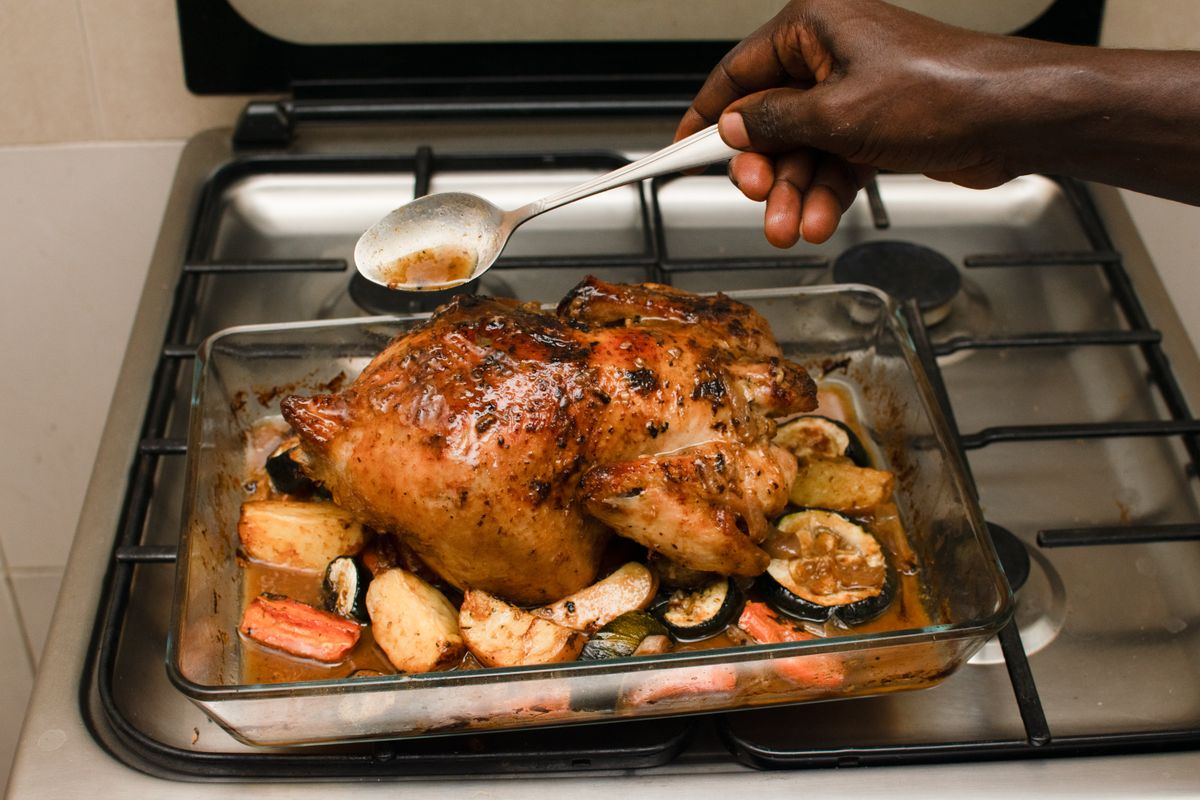
Prime Rib Cooking Time Per Pound, and the Carryover Math That Overcooked My $140 Roast
Two Christmases ago I spent $140 on an 8-pound, 4-rib roast, seasoned it for two days, and pulled it out of the oven at exactly 130°F because that's what the internet said "medium-rare" was. Forty minutes later, I carved into grey-pink slices. My brother-in-law, who orders his steak "still mooing", politely asked for extra horseradish. The thermometer wasn't wrong. I was: I never accounted for the temperature the roast kept climbing after it left the oven.
This guide is for anyone cooking a standing rib roast for Christmas, Thanksgiving or a big Sunday dinner. By the end you'll know how long to cook prime rib per pound, which temperature to pull it at for each doneness, and how to work backwards from the time you want to eat so the roast isn't ready two hours early.
Quick Answer: Prime Rib Cooking Time Per Pound
At 325°F, allow about 13 minutes per pound for rare, 15 for medium-rare, 17 for medium and 19 for medium-well. At 250°F, allow 20 to 28 minutes per pound. Pull the roast about 10°F below your target (120°F for medium-rare), because the temperature keeps rising while it rests. The Prime Rib Cooking Time Calculator gives you a start time for any weight.
Why Did My Prime Rib Overcook After I Pulled It?
Carryover cooking is the rise in a roast's internal temperature after it leaves the oven, as heat stored in the hot outer layers keeps moving toward the cooler centre. For a large roast like prime rib, it typically adds 5 to 10°F during a 30-minute rest.
That's the whole story of my grey roast. I pulled at 130°F, the centre coasted up to roughly 140°F, and "medium-rare" became "medium". The fix is to pull early and let the rest finish the job.
| Doneness | Pull temp | After rest | Centre |
|---|---|---|---|
| Rare | 115°F (46°C) | 125°F (52°C) | Cool red |
| Medium-rare | 120°F (49°C) | 130°F (54°C) | Warm red |
| Medium | 130°F (54°C) | 140°F (60°C) | Pink |
| Medium-well | 140°F (60°C) | 150°F (66°C) | Slight pink |
The USDA Food Safety and Inspection Service recommends cooking beef roasts to a minimum of 145°F (63°C) followed by a 3-minute rest. Many cooks serve prime rib at 125–135°F, which is below that guideline, so pick your doneness knowing the trade-off, especially if you're cooking for children, older guests or anyone pregnant.
Key Takeaway
Pull a prime rib about 10°F below the temperature you want to serve. The 30-minute rest is part of the cooking, not a pause after it.

How Long Do You Cook Prime Rib Per Pound?
A prime rib cooking time calculation multiplies the roast's weight by a minutes-per-pound rate that depends on oven temperature and doneness. It gives you a starting estimate for when to begin checking, not a replacement for a thermometer.
At 325°F (163°C), the common rates are 13 minutes per pound for rare, 15 for medium-rare, 17 for medium and 19 for medium-well.
My 8-pound roast at medium-rare: 8 × 15 = 120 minutes, or 2 hours. The method changes that a lot:
| 8 lb roast | Oven time | Style |
|---|---|---|
| 325°F standard | 2 hr | Classic crust, grey band |
| 250°F low and slow | 2 hr 56 min | Even colour, softer crust |
| Reverse sear | 4 hr 12 min | Edge-to-edge pink, crisp finish |
Reverse sear means roasting at 225°F until the centre is just shy of your pull temperature, then blasting at 500°F for about 12 minutes to build the crust. Slower and gentler cooking leaves a narrower grey band under the surface, which is why steakhouses favour it. The trade-off is time, so it needs the most planning.
💡 Pro Tip
Start checking the temperature about 30 minutes before the estimated time. Roast shape, bone structure and a slightly-off oven can easily move the real time by 15 to 20 minutes either way.
Not sure what you have in kilograms? A 3.6 kg roast is about 8 lb (1 kg = 2.205 lb), and the weight converter will do it for you. In the UK and Australia, the same cut is usually sold as a bone-in rib of beef, and the same timings apply.
How Do You Work Out Your Start Time?
Most holiday disasters aren't about the roast at all. They're about starting at the wrong time. The method is to work backwards from when you want to eat:
Say dinner is at 5:00 pm and the roast is 8 lb, medium-rare:
- Standard 325°F: 5:00 pm − 2 hr − 30 min = 2:30 pm
- Low and slow 250°F: 5:00 pm − 2 hr 56 min − 30 min = 1:34 pm
- Reverse sear: 5:00 pm − 4 hr 12 min − 30 min = 12:18 pm
Notice that this ignores the time the roast needs on the counter first. Take it out of the fridge about an hour before it goes in, since a fridge-cold centre adds to cooking time and makes the outside overcook before the middle warms up.

Prime rib hogs the oven for a long stretch, then needs a 30-minute rest where your oven is free. That window is when your Yorkshire puddings, roast potatoes or rolls get their turn. If you're also cooking a bird or a ham, run each through its own calculator: the turkey cooking time calculator and ham cooking time calculator use different rates, and the cooking time calculator covers everything else on the menu.
⚠️ Note
A roast stays hot for up to an hour under a loose foil tent, so a 20-minute overrun on the rest is fine. An hour of delay at the other end (an undercooked centre) is not. If in doubt, finish early and rest longer.
How Much Prime Rib Do You Need?
Plan roughly 1 pound of bone-in roast per guest, or about ¾ pound per guest for boneless. Bones can account for up to a third of the weight, which is why a 4-rib, 8-pound roast serves about 8 people, not 12.
| Guests | Bone-in | Boneless |
|---|---|---|
| 4 | 4 lb | 3 lb |
| 8 | 8 lb | 6 lb |
| 12 | 12 lb | 9 lb |
In metric terms, that's roughly 450 g of bone-in roast per person. Add a pound for hearty eaters or if you want sandwiches on Boxing Day. A 12-pound roast at $20 per lb is $240, so a few minutes of arithmetic here protects your wallet as much as your dinner.

Prime Rib Mistakes That Cost You the Roast
- Pulling at the target temperature. This is mine. Pull 10°F early and rest 30 minutes.
- Trusting the dial in your oven. Many home ovens run 15 to 25°F off. An inexpensive oven thermometer is worth it.
- Probing next to the bone. Bone conducts heat differently and reads high. Insert the probe into the thickest part of the meat, away from bone.
- Carving straight away. Cutting into a roast that hasn't rested pushes juices onto the board instead of keeping them in the slice.
- Reusing last year's timing. Each extra pound adds about 15 minutes at 325°F, so a 10-pound roast needs 30 more minutes than an 8-pound one. Recalculate whenever the weight changes.
Frequently Asked Questions
How long does it take to cook prime rib per pound?
At 325°F, roughly 13 minutes per pound for rare, 15 for medium-rare, 17 for medium and 19 for medium-well. At 250°F, expect 20 to 28 minutes per pound. Always confirm with a thermometer.
What temperature should I pull prime rib out of the oven?
Pull 10°F under your target: 120°F for medium-rare, 130°F for medium. Carryover cooking raises it to about 130°F and 140°F after a 30-minute rest.
Should I cook prime rib bone-in or boneless?
Bone-in is more forgiving: the bones insulate the meat and add flavour. Boneless cooks a little faster and carves more easily, so check the temperature earlier and plan for ¾ pound per guest.
Can I cook prime rib ahead of time?
You can hold a rested roast, loosely tented, for up to about an hour. For longer gaps, many cooks prefer reverse sear, which keeps the centre at your target temperature longer and lets you finish the crust just before serving.
Is prime rib safe to eat medium-rare?
The USDA's guideline for beef roasts is 145°F, so medium-rare is below it. Whole cuts like roasts carry less surface risk than ground beef, but avoid serving it rare to pregnant guests, young children or anyone with a weakened immune system.
⚠️ Disclaimer
This article is for informational purposes only and does not constitute food safety or medical advice. Follow the guidance of your local food safety authority and consult a qualified professional for your specific situation.
Try It Yourself
The lesson from my grey Christmas roast is simple: the thermometer decides doneness, but the arithmetic decides whether dinner happens on time. Pull early, rest for 30 minutes, and count backwards from the moment you want people at the table.
Enter your roast's weight, doneness and method into the prime rib cooking time calculator to get the oven time, pull temperature and start time. Then line up the rest of the meal with the turkey cooking time calculator and cooking time calculator, and convert the roast weight with the weight converter if your butcher works in kilograms.