Why Your Tire Pressure Light Comes On Every Fall (And What PSI, kPa, and Bar Actually Mean)
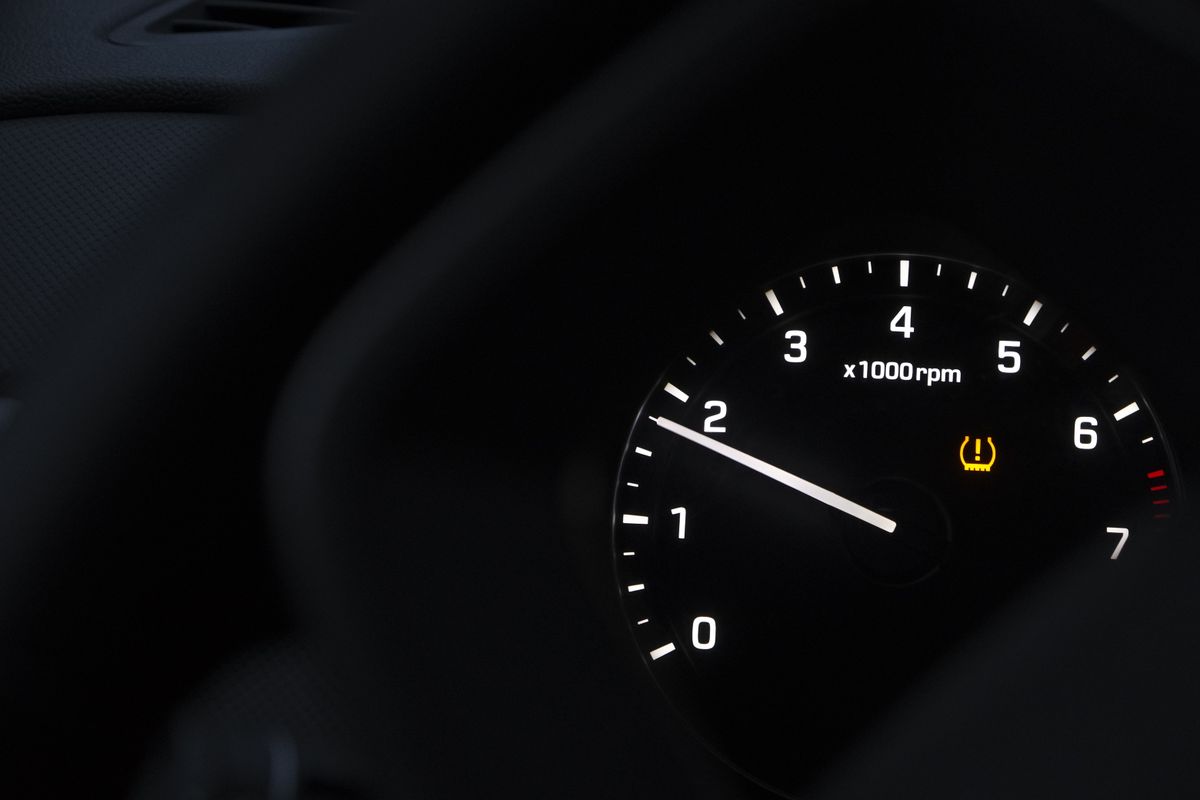
Every September, on almost exactly the same week, my tire pressure light comes on. Not because I ran over anything, not because I've been neglecting the car — I check my tires maybe twice a year, if I'm honest — but because the first genuinely cold night of the season just happened, and my tires lost pressure sitting in the driveway doing nothing at all. I used to drive straight to the gas station convinced I had a slow leak. I didn't. What I had was a temperature swing doing exactly what it does to a sealed volume of gas every single year, and a warning light that's honestly not very good at explaining why it's on.
The confusing part isn't just the light — it's the units. My car's door jamb sticker says 35 PSI. The gauge at the corner gas station reads in PSI too, but the digital pump at the place near my in-laws (who drive a car imported from Germany) only displays bar. A rental I picked up in the UK last year showed kPa on the dashboard readout. None of those numbers look like each other, and if you don't know the conversion, it's easy to either wildly over- or under-inflate a tire because you misread which unit you're looking at.
Why Cold Weather Drops Tire Pressure (Without a Leak)
Tire pressure is just the pressure of air sealed inside a fixed volume, and that pressure rises and falls with temperature even when no air is added or lost. This relationship is described by Gay-Lussac's Law: at constant volume, pressure is directly proportional to absolute temperature. Cool the air down and the pressure drops; nothing has to leak for that to happen.
The rule of thumb that tire manufacturers, the U.S. National Highway Traffic Safety Administration (NHTSA), and the Tire Industry Association all cite is the same: tire pressure changes by roughly 1 PSI for every 10°F change in ambient temperature (equivalently, about 7 kPa or 0.07 bar for every 5.5°C). A 30°F overnight drop — not unusual for the first cold snap of fall — is enough to pull a tire down by about 3 PSI on its own, with zero punctures involved.
Here's the worked example that matches what happened to me: my door placard calls for 35 PSI cold. The evening before, it was 68°F when I parked; by early morning it had dropped to 38°F, a 30°F swing.
That's not even close to a flat tire, but it's enough to trip the light on many vehicles. Federal law (FMVSS No. 138) requires the warning light to illuminate once a tire is 25% or more below the vehicle's recommended cold pressure, but plenty of manufacturers set their systems to warn well before that federal floor — which is exactly why some drivers see the light after what feels like a small, unremarkable overnight cool-down.
Key Takeaway
A dropping thermometer, not a puncture, is the most common reason a tire pressure light comes on in fall. Check the actual PSI with a gauge before assuming you need a repair — you'll usually just need air.
What Do PSI, kPa, and Bar Actually Mean?
Cold tire pressure is a tire's air pressure measured before the vehicle has been driven, while the tire sits at ambient outdoor temperature. It's the figure printed on your vehicle's door jamb placard, and it's the only reading that's genuinely comparable day to day — driving for even ten minutes heats the air inside the tire through friction and can temporarily push the reading up by 4–6 PSI, which is why manufacturers always specify pressures "cold."
The three units you'll actually run into:
- PSI (pounds per square inch) — the standard in the US, Canada, and the UK for everyday tire gauges and door placards.
- kPa (kilopascal) — the metric SI unit, used on placards and dashboard readouts across most of Europe, Australia, and Asia.
- Bar — a metric unit almost exactly equal to standard atmospheric pressure (1 bar ≈ 0.987 atm), commonly used on European service-station pumps and workshop gauges.
Is the Number on the Tire Sidewall the Same as the Recommended Pressure?
No, and mixing these up is one of the most common tire-inflation mistakes. The number molded into the tire sidewall (e.g., "MAX PRESS 44 PSI") is the maximum the tire can safely hold — not the recommended pressure for your vehicle. Your car's actual recommended cold pressure is set by the vehicle manufacturer for ride, handling, and load, and it's printed on the door jamb sticker (usually the driver's side) or in the owner's manual, almost always lower than the tire's stamped maximum.
⚠️ Note
Always inflate to the vehicle placard number, not the tire's maximum sidewall figure. Using the sidewall max can make the ride harsher and wear the center of the tread faster.
How to Convert Between PSI, kPa, and Bar
The conversion factors are fixed constants — 1 PSI equals exactly 6.89476 kPa, and 1 bar equals exactly 100 kPa — so the math is simple multiplication once you know which direction you're going:
Here's how the common placard values line up across all three units:
| PSI | kPa | Bar |
|---|---|---|
| 30 | 207 | 2.1 |
| 32 | 221 | 2.2 |
| 33 | 228 | 2.3 |
| 35 | 241 | 2.4 |
| 36 | 248 | 2.5 |
| 38 | 262 | 2.6 |
So if a rental car's dashboard or a European pump reads "2.4 bar," that's 35 PSI — my exact placard spec. If a station only offers a kPa readout at 220, that's essentially 32 PSI, not the 220-something-huge number it looks like at first glance.
💡 Pro Tip
Take a photo of your door jamb placard in all three units before a road trip abroad or a rental pickup. It takes ten seconds and removes all the guessing at an unfamiliar pump.
For anything outside these common reference points — an odd placard spec, a motorcycle or trailer tire, or a workshop gauge reading in a fourth unit like atmospheres — the Pressure Converter handles PSI, kPa, bar, atm, and torr instantly, and it's the fastest way to double-check a number before you start adding air.
Does Underinflated Pressure Really Cost You at the Pump?
Yes, measurably, and this is the part most people underestimate. The U.S. Department of Energy's fueleconomy.gov program estimates that gas mileage drops by about 0.2% for every 1 PSI that a set of tires runs below its recommended pressure, and that keeping tires properly inflated can improve fuel economy by up to 3% overall. On the scenario above — 3 PSI low across all four tires after a cold snap — that's roughly a 0.6–1% mileage hit, which sounds small until you're running it across a whole tank, a whole winter, or a whole road trip.
Underinflated tires also flex more as they roll, which increases rolling resistance and generates extra heat — the same physical effect that shortens tread life and, in more extreme cases, contributes to tire failure at highway speed. None of this requires a dramatic pressure drop to start mattering; it accumulates quietly every time the temperature falls and nobody adds air back.
Key Takeaway
A few missing PSI rarely feels dangerous, but it's a real, ongoing cost in fuel and tread life. Checking pressure at the start of each season — not just when a light comes on — catches it before it adds up.
If you're trying to see exactly what a percentage point or two of fuel economy is worth over a year of driving, the Fuel Economy Converter lets you compare MPG, L/100km, and km/L side by side, so a small efficiency loss translates into an actual number instead of a vague feeling.
Frequently Asked Questions
Why does my tire pressure light come on in cold weather if my tires aren't leaking?
Air pressure is directly tied to temperature at a fixed volume. As the ambient temperature drops — especially overnight or with the season's first cold snap — the air inside a sealed tire contracts and its pressure falls by roughly 1 PSI for every 10°F drop, which is often enough to trigger the warning light without any actual air loss.
Should I inflate to the number on the tire sidewall or the door jamb sticker?
Use the door jamb sticker (or owner's manual) figure. The sidewall number is the tire's maximum safe pressure, set by the tire manufacturer — it's almost always higher than the vehicle manufacturer's recommended cold pressure, which is tuned for your specific car's ride and handling.
How do I convert bar or kPa to PSI at a foreign pump or on a rental car?
Multiply PSI by 6.895 to get kPa, or by 0.0689 to get bar — so 35 PSI is about 241 kPa or 2.4 bar. For a quick lookup without doing the math yourself, the Pressure Converter handles PSI, kPa, bar, atm, and torr in either direction instantly.
Does the tire pressure light always mean I have a puncture?
No. Temperature swings are one of the most common causes, especially at the start of a new season. Check the actual pressure with a gauge first; if all four tires (plus the spare, if monitored) read close to each other and just a few PSI low, it's very likely temperature, not a leak. A single tire reading far lower than the others is a better sign of an actual puncture or slow leak.
How much can underinflated tires actually affect gas mileage?
The U.S. Department of Energy's fueleconomy.gov program estimates roughly a 0.2% drop in fuel economy for every 1 PSI a tire runs below its recommended pressure, with proper inflation improving fuel economy by up to 3% overall. It's a modest per-tank effect that compounds noticeably over a season of driving.
Try It Yourself
Cold weather drops tire pressure through simple physics, not through a leak — but the units make it confusing to know whether you're actually low. Check your door jamb placard, grab a gauge, and use the Pressure Converter to move instantly between PSI, kPa, bar, atm, and torr, whatever your gauge or pump happens to display.
Also worth checking:
- Temperature Converter — to see exactly how far your local temperature has swung between your last check and today
- Fuel Economy Converter — to translate a small efficiency loss into MPG, L/100km, or km/L you can actually compare