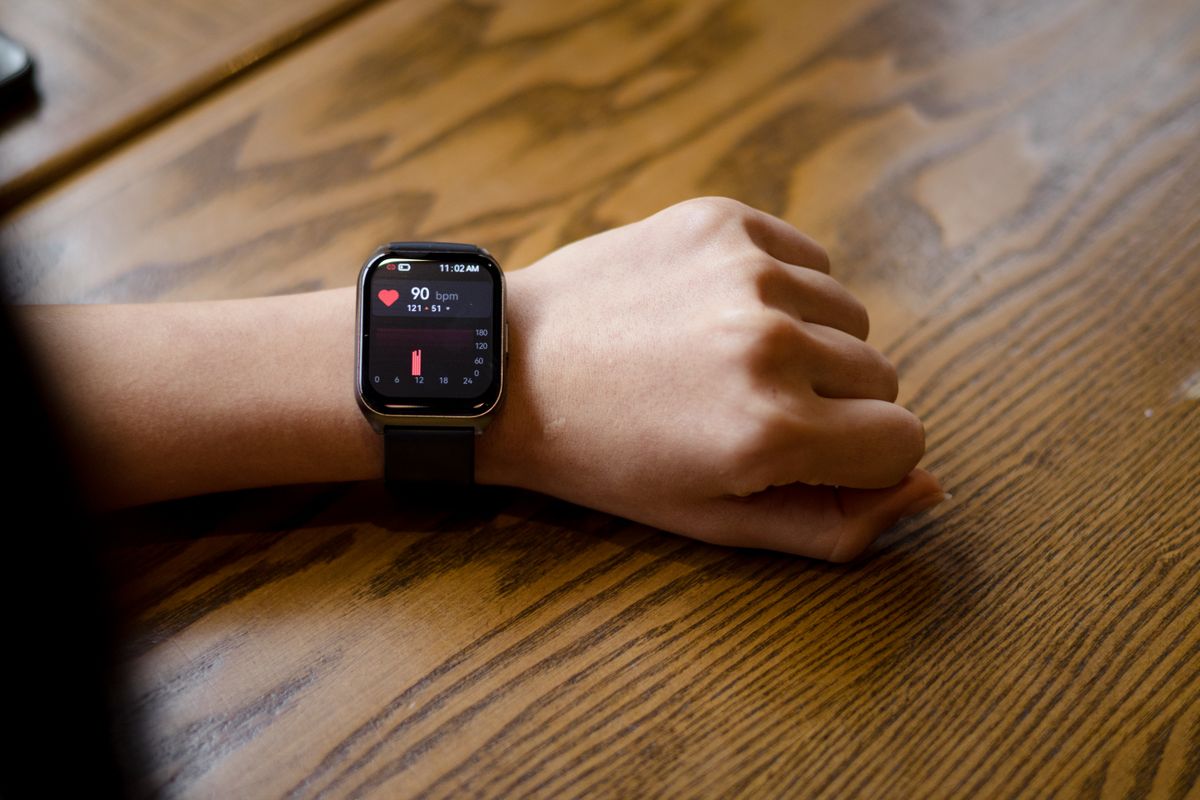
I Thought I Was Running Easy. My Heart Rate Said I Was in Zone 4.
Three minutes into what I'd have sworn was an easy recovery jog, my watch buzzed. Not a mileage alert — a zone alert. Zone 4. I checked my pace: 9:15 per mile, a pace I'd have called "conversational" without a second thought. My heart rate said otherwise — 152 bpm, which at my age put me at roughly 84% of max. I wasn't jogging easy. I was doing tempo work and calling it recovery, four days a week, for months.
If you've read anything about "zone 2 training" in the last couple of years — and it's hard to avoid, given how much longevity and endurance-sport content is built around it right now — you've probably assumed you already know what it feels like. Most people doing "zone 2" are actually running, riding, or rowing too hard to get the adaptation they're chasing. This article covers what zone 2 actually is, how heart rate zones are calculated, and a real worked example of just how far off "it feels easy" can be from what your heart rate is doing.
⚠️ Disclaimer
This article is for informational and educational purposes only and does not constitute medical advice. Heart rate zone estimates use population-average formulas and can be significantly off for individuals. Consult a doctor before starting a new training programme, especially if you have any cardiovascular history.
What Is Zone 2 Training and Why Is It Suddenly Everywhere?
Zone 2 training is aerobic exercise performed at roughly 60–70% of maximum heart rate — an intensity low enough to sustain a conversation but high enough to still be genuine training stimulus. It builds mitochondrial density and aerobic capacity without accumulating the fatigue that harder sessions do, which is why endurance coaches use it as the foundation of most training plans.
The current wave of interest traces back to endurance-sport coaching crossing into mainstream longevity content — physicians and exercise physiologists popularising the idea that low-intensity aerobic volume is one of the more reliable levers for long-term cardiovascular and metabolic health, not just race performance. That crossover is why a term that used to live exclusively in cycling and triathlon training plans now shows up in general health articles, wearable-app summaries, and fitness influencer content aimed at people who've never raced anything.
The problem is that "zone 2" got popularised as a feeling — "easy," "conversational," "could do it all day" — before most people ever calculated what their actual zone 2 heart rate range is. That gap between the vibe and the number is exactly where I went wrong.
How Heart Rate Zones Are Actually Calculated
Heart rate zones are built as percentage bands of your maximum heart rate (MHR) — the highest rate your heart can safely reach during maximal exertion. The most common estimating formula is:
This is the Fox formula, published in 1971, and it's still the most widely cited version. It's also known to carry a standard deviation of roughly ±10–12 beats per minute — meaning it can misjudge a genuinely fit or older adult's true max by a meaningful margin. A more modern alternative from Tanaka, Monahan, and Seals (2001), developed from a meta-analysis of over 18,000 subjects, is:
Once you have an MHR estimate, zone 2 is simply 60–70% of it. Here's how that breaks down across a typical adult age range using the Tanaka formula:
| Age | Estimated MHR | Zone 2 range (bpm) |
|---|---|---|
| 30 | 187 | 112–131 |
| 40 | 180 | 108–126 |
| 50 | 173 | 104–121 |
| 60 | 166 | 100–116 |
Both formulas are estimates built from population averages, not a measurement of you specifically. The heart rate zones calculator runs both formulas automatically and breaks your result into all five training zones, so you're not doing the percentage math on a sweaty phone screen mid-run.
Key Takeaway
Zone 2 is 60–70% of your maximum heart rate — not a feeling, not a pace, and not "moderately easy." If you haven't run the percentage on an actual MHR number, you don't know your zone 2, you're guessing at it.
The Zone 2 Mistake Almost Everyone Makes
Here's the maths that caught me out. I'm 38. Using the Tanaka formula: 208 − (0.7 × 38) = 181 bpm estimated max. Zone 2 at 60–70% of that is 109–127 bpm.
My "easy" 9:15/mile pace was sitting at 152 bpm — 84% of estimated max, which is squarely zone 4, not zone 2. To actually get into the 109–127 bpm range, I had to slow down to something closer to 11:45–12:15 per mile (roughly 7:20–7:40 per km). That's not a small adjustment. That's nearly three minutes per mile slower than the pace I'd been calling "recovery" — closer to a brisk walk with occasional jogging than what I'd pictured as an easy run.
| Effort I thought it was | Actual heart rate | Actual zone | Zone 2 pace needed |
|---|---|---|---|
| "Easy jog," 9:15/mile | 152 bpm (84% MHR) | Zone 4 | 11:45–12:15/mile |
This isn't unusual — it's close to the norm for anyone reasonably fit trying zone 2 for the first time without a heart rate strap. Fitness raises your pace at a given heart rate over time, so a pace that used to be zone 3 becomes zone 2 as you get fitter — but your ego doesn't adjust downward as fast as your fitness improves, and most runners default to whatever pace "feels like an easy day" rather than the pace their heart rate actually demands.

⚠️ Note
The same mismatch shows up on a bike and in the pool, not just running. Cyclists chasing zone 2 on a group ride routinely get pulled into zone 3–4 just by riding with faster friends. If your training partner is talking and you're not, you've probably left zone 2 already.
Why Training Slower Actually Works
It feels counterintuitive to slow down on purpose, so it's worth being specific about why coaches build entire plans around it. Norwegian exercise physiologist Stephen Seiler's research on elite endurance athletes found that many spend roughly 80% of total training time in low-intensity zones (zone 1–2) and only about 20% in high-intensity zones (zone 4–5) — a distribution known in sports science as polarized training. The middle-intensity "grey zone" that most recreational athletes default to (comfortably hard, but not truly easy or truly hard) is deliberately minimised in elite programmes, because it accumulates fatigue without producing the top-end adaptations that genuinely hard intervals do.
At the physiological level, low-intensity aerobic volume is one of the more reliable ways to increase mitochondrial density and improve the body's ability to use fat as fuel at a given pace — adaptations that raise the pace or power you can sustain aerobically before you tip into higher zones. Training too hard, too often, blunts that adaptation and leaves you fatigued for the sessions that are actually supposed to be hard.
💡 Pro Tip
Pair a zone 2 heart rate cap with the "talk test": you should be able to speak in full sentences without gasping. If you can't hold a conversation, you're not in zone 2 regardless of what your watch's auto-detected zones say — auto-calculated max heart rates are frequently wrong.
How to Actually Get — and Stay — In Zone 2
- Calculate your real zone 2 range first. Use the heart rate zones calculator with your age, or better, a tested max heart rate from a supervised effort test if you have one.
- Strap on a chest monitor, not just a wrist sensor. Optical wrist sensors lag during pace changes and are frequently off by 10+ bpm mid-effort — exactly when you need the reading to catch you drifting out of zone.
- Slow down more than feels reasonable. If your first zone 2 session feels almost embarrassingly slow, that's usually a sign you've actually hit it. Expect it to feel too easy for the first few weeks.
- Apply it across disciplines. Zone 2 works the same way on a bike — check effort against a cycling FTP calculator for power-based zones — or when pacing a broader session with a pace training zones calculator.
- Track the trend, not one session. As fitness improves, your pace at the same zone 2 heart rate should gradually increase over weeks — that rising pace-at-heart-rate trend is a better fitness indicator than any single run.
That's a different mode entirely from the sessions where you're supposed to be uncomfortable — interval days, hill repeats, race pace work — where heart rate should climb into zone 4–5 on purpose.

Frequently Asked Questions
What heart rate is zone 2 training?
Zone 2 is typically 60–70% of your estimated maximum heart rate. For a 40-year-old using the Tanaka formula (MHR ≈ 180 bpm), that's roughly 108–126 bpm. The exact number depends on your actual max heart rate, which varies by individual regardless of age.
Why can't I hit zone 2 at my normal easy pace?
Most people's "easy" pace is actually zone 3 or zone 4 effort, because they're pacing off perceived effort rather than a measured heart rate. Slowing down to a pace that feels too easy — sometimes closer to a brisk walk than a jog — is usually what it takes to genuinely stay under 70% of max heart rate.
Is zone 2 training backed by science, or is it just a trend?
The underlying principle — that endurance athletes benefit from a high proportion of low-intensity training volume — is well established in sports science, including Stephen Seiler's research on polarized training in elite athletes. The recent surge in mainstream popularity is newer, but the training method itself has decades of use in professional endurance coaching.
How long should a zone 2 session last?
Most coaching guidance suggests 30–90 minutes per session, with longer durations for more experienced endurance athletes. Because the intensity is low, zone 2 sessions are generally more recoverable than harder efforts, which is what allows them to make up the bulk of a weekly training plan.
Does zone 2 training work for cycling and swimming, not just running?
Yes — the heart rate percentage bands apply the same way regardless of sport, since they're based on your max heart rate, not a specific pace or speed. Cyclists often combine heart rate zones with power-based zones from an FTP test for more precision, since heart rate can lag behind sudden power changes.
Try It Yourself
Zone 2 isn't a feeling — it's a heart rate range, and most people training "zone 2" by feel alone are running well outside it. Calculate your real max heart rate estimate and see all five training zones broken down with actual bpm ranges.
Use the Heart Rate Zones Calculator to find your zone 2 range from your age or a measured max heart rate. Pacing a run specifically? Cross-check with the running pace calculator or the broader pace training zones calculator, and if cycling is more your sport, dial in effort with the cycling FTP calculator.