What's a Good Cap Rate? The Formula That Almost Talked Me Into a Bad Rental
The listing said "8% cap rate, turnkey, tenant in place." The agent's flyer had it printed in bold, right under the asking price of $210,000. I was three weeks into looking for my first rental property and that number felt like a green light — an 8% return, with a tenant already paying rent, sounded like exactly what every real estate podcast had told me to look for.
Then I actually built out the numbers myself instead of trusting the flyer, and the real cap rate was closer to 5.1%. The agent's math had "forgotten" property management fees, a vacancy allowance, and about $1,800 a year in maintenance the seller hadn't mentioned. Same property, same rent roll — a completely different investment once the expenses that actually show up were included.
⚠️ Disclaimer
This article is for informational purposes only and does not constitute financial or investment advice. Always consult a qualified real estate or financial professional before purchasing an investment property.
What Is a Cap Rate and How Do You Calculate It?
A capitalization rate (cap rate) is the annual return a property generates from its net operating income relative to its purchase price, expressed as a percentage. It assumes an all-cash purchase with no mortgage, which makes it a pure measure of a property's income-producing ability, independent of how any individual buyer chooses to finance it. Appraisers, lenders, and investors all use it as a common language for comparing properties of wildly different sizes and prices.
The formula itself is short:
The part people get wrong isn't the division — it's what goes into NOI. Net Operating Income is the annual income a property produces after operating expenses, but before mortgage payments, income taxes, and depreciation. It's gross rental income, minus a vacancy allowance, minus every operating cost a landlord actually pays: property management, insurance, property tax, repairs, and any utilities or HOA fees not passed on to the tenant.
| Included in NOI | Excluded from NOI |
|---|---|
| Gross rental income | Mortgage principal & interest |
| Property management fees | Income tax |
| Insurance & property tax | Depreciation |
| Repairs & maintenance | Capital expenditures |
| Vacancy allowance (deducted) | Down payment / closing costs |
A property earning $18,000/year in NOI and priced at $300,000 has a cap rate of 6%. Change the price to $225,000 with the same NOI, and the cap rate jumps to 8% — same building, same income, a very different deal, purely because of price. That's the whole point of the metric: it strips price out of the comparison so you can judge income quality on its own.
The Deal That Looked Perfect Until I Ran the Real Numbers
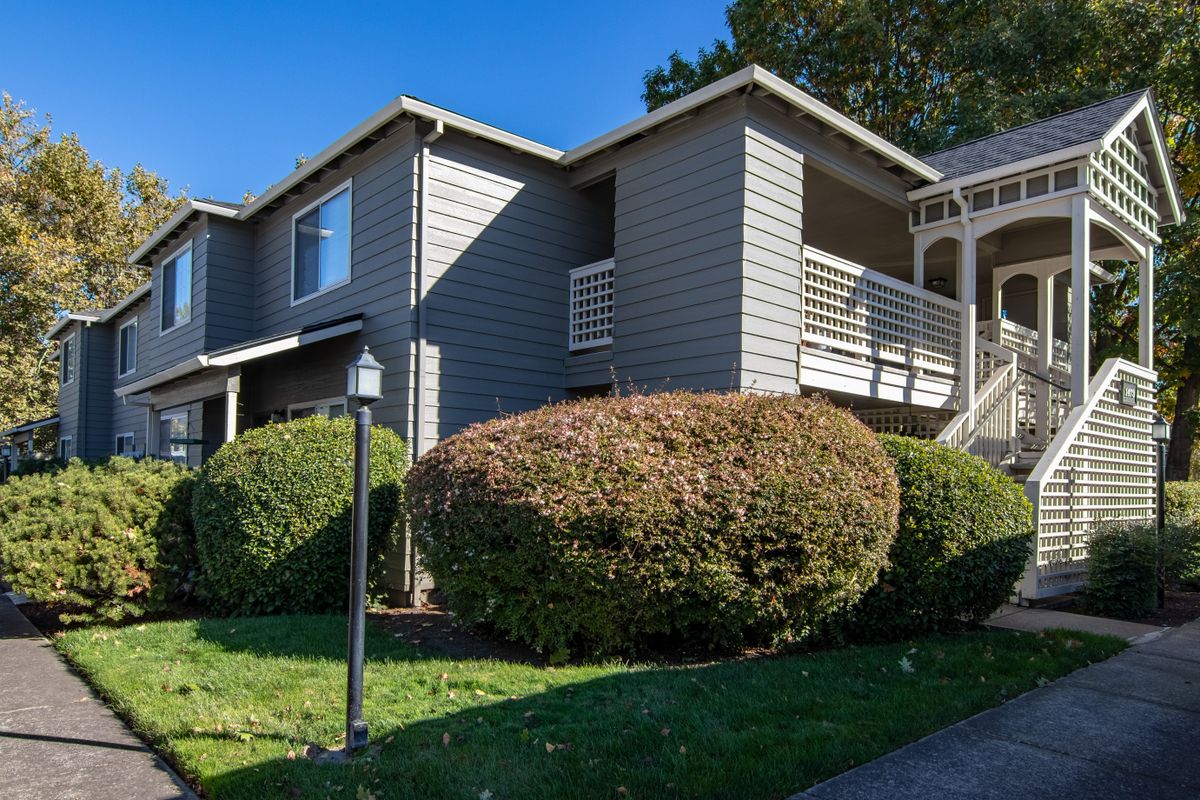
Back to that $210,000 duplex. The agent's flyer built its 8% figure like this:
- Gross rent: $2,240/month → $26,880/year
- "Expenses" (property tax + insurance only): $9,480/year
- Their NOI: $17,400
- Their cap rate: $17,400 ÷ $210,000 = 8.3%
Here's what the flyer left out, based on what I actually found once I pulled comparable rentals and asked a local property manager for real quotes:
- Property management (8% of rent, since I don't live nearby): $2,150/year
- Vacancy allowance (5% of rent — one month every ~20): $1,344/year
- Maintenance reserve (1% of value): $2,100/year
- Their overstated expense figure corrected upward by: $1,800/year
Real NOI: $26,880 − $9,480 − $2,150 − $1,344 − $2,100 − $1,800 = $9,206
Real cap rate: $9,206 ÷ $210,000 = 4.4% — nearly half of what the listing advertised.
Key Takeaway
Cap rates printed on listings are marketing numbers, not underwriting numbers. Sellers routinely use "pro forma" income and thin, incomplete expense lists to inflate the advertised return. Always rebuild NOI yourself using real quotes for management, insurance, and maintenance before trusting a cap rate you didn't calculate.
The same formula works in reverse for valuing a property against a target return. If you know the market expects a 6% cap rate for properties like this one, and you know the real NOI, you can back into what you should actually offer:
With a real NOI of $9,206 and a 6% target, the implied value is $9,206 ÷ 0.06 = $153,433 — nearly $57,000 below the $210,000 asking price. That gap is exactly what a real cap rate calculation is supposed to surface before you sign anything, and it's the second mode built into the Cap Rate Calculator: flip it around to solve for value instead of rate.

What's a Good Cap Rate in 2026?
There's no single "good" cap rate — it depends entirely on the asset class, the market, and how much risk you're being asked to accept for the return. A higher cap rate isn't automatically better; it usually means the market is pricing in more risk, more management effort, or a less desirable location.
| Market type | Typical cap rate range | What it usually means |
|---|---|---|
| Major gateway cities (NYC, SF, London, Sydney) | 3–4.5% | Lower risk, strong appreciation potential, harder cash flow |
| Growing secondary metros | 5–7% | Balance of income and appreciation |
| Smaller/tertiary markets | 7–10%+ | Higher income, typically higher management burden and risk |
Class A newly built multifamily properties in strong metros commonly trade at the lower end of these ranges, while older Class C properties in less competitive submarkets trade at the higher end — the extra points of yield compensate the buyer for more maintenance, higher turnover, and more management-intensive tenants.
💡 Pro Tip
Don't judge a cap rate in isolation — compare it against similar properties (same asset class, similar location) sold in the last 6–12 months. A 6% cap rate can be excellent in one submarket and a warning sign in another, depending on what "normal" looks like there right now.
If you're investing outside the US, you'll more often hear the term "rental yield" instead of cap rate — the UK and Australian markets both lean on this terminology. Gross rental yield is annual rent divided by property value (no expenses deducted), while net yield deducts costs the same way NOI does, making it the closer equivalent to a US cap rate. A London flat renting for £1,800/month (£21,600/year) on a £480,000 purchase has a gross yield of 4.5% — worth running through the Rental Yield Calculator to see the net figure once service charges, letting agent fees, and void periods are factored in. An Australian investor comparing a Brisbane unit at A$550,000 with A$28,600/year in rent gets a similar gross yield of 5.2%, before the equivalent deductions.

Cap Rate vs Cash-on-Cash Return: What's the Difference?
Cap rate and cash-on-cash return get confused constantly because they're both expressed as percentages and both describe "return," but they answer different questions.
Cap rate assumes an all-cash purchase and ignores financing entirely — it measures the property's income performance on its own. Cash-on-cash return measures your actual return on the cash you put in, after mortgage payments, which means your loan terms directly change the number.
Take that duplex with its real $9,206 NOI and a corrected $153,000 purchase price. Bought in cash, the return is the 6% cap rate. But finance it with 25% down ($38,250) at a 7% mortgage rate, and the math changes completely:
- Annual mortgage payment (25-year amortization, 7%): approximately $9,720
- Cash flow after debt service: $9,206 − $9,720 = −$514/year
- Cash-on-cash return: −$514 ÷ $38,250 = −1.3%
This is negative leverage — the mortgage rate (7%) exceeds the cap rate (6%), so financing the deal makes the return worse, not better. If the cap rate had been 8% against the same 7% loan rate, leverage would work in the buyer's favor instead, amplifying the cash-on-cash return above the unleveraged cap rate.
⚠️ Note
Whenever your mortgage interest rate is higher than the property's cap rate, borrowing to buy the deal reduces your return compared to paying cash — this is called negative leverage. Always compare the two rates before assuming financing will boost your returns.
This is also why cap rate alone can't tell you whether a deal works for you specifically. Two investors can look at the exact same property, the exact same cap rate, and walk away with completely different cash-on-cash outcomes depending on their down payment and loan terms. Cap rate tells you about the asset; cash-on-cash tells you about the deal you personally signed up for.
Frequently Asked Questions
Is a higher cap rate always better?
No. A higher cap rate usually reflects higher perceived risk — a less desirable location, more deferred maintenance, or a tenant base with higher turnover. A lower cap rate typically means the market sees the property as lower-risk with stronger long-term appreciation prospects. Compare cap rates against similar properties in the same submarket rather than treating a higher number as automatically superior.
Does cap rate account for the mortgage payment?
No — cap rate deliberately excludes mortgage principal, interest, income tax, and depreciation. It assumes an all-cash purchase so that properties can be compared purely on their income-generating ability, regardless of how any particular buyer chooses to finance them. If you want a return figure that includes your actual financing, use cash-on-cash return instead.
How is cap rate different from rental yield?
They're close cousins. Cap rate (common in the US) always uses net operating income. "Rental yield" (the more common term in the UK and Australia) sometimes refers to gross yield — rent divided by price with no expenses deducted — and sometimes to net yield, which mirrors cap rate exactly. When comparing internationally, always check whether a quoted yield is gross or net before comparing it to a US cap rate.
What expenses do sellers most commonly leave out of an advertised cap rate?
The most common omissions are property management fees (especially if the seller self-manages and you won't), a realistic vacancy allowance, and an ongoing maintenance reserve. Sellers also sometimes use "pro forma" market rent instead of actual current rent, which inflates the income side of the calculation as well as understating the expense side.
Can I use cap rate for a single-family rental, or only for commercial and multifamily?
Cap rate works for any income-producing property, including single-family rentals, though it's used most heavily in commercial and multifamily investing where it's the standard valuation shorthand. For single-family homes, it's especially useful for comparing a rental purchase against putting the same cash into a different asset class entirely.
Try It Yourself
The number on a listing flyer is a marketing claim until you rebuild it yourself. Pull the real rent, the real expenses, and a realistic vacancy allowance, and let the math tell you whether the deal is actually as good as it sounds.
Use the Cap Rate Calculator to find the true cap rate from NOI and price, or flip it around to solve for the value a target cap rate implies.
Also worth running:
- Rental Yield Calculator — the UK/Australian equivalent, for gross and net yield
- Home Affordability Calculator — if you're weighing an investment purchase against your own borrowing capacity
- Rent vs Buy Calculator — compare the numbers if you're deciding whether to invest at all versus renting where you live