The Riegel Formula Predicted a 3:31 Marathon From My 5K Time. My Actual Marathon Was 3:40. Here's Why the Gap Is Normal.
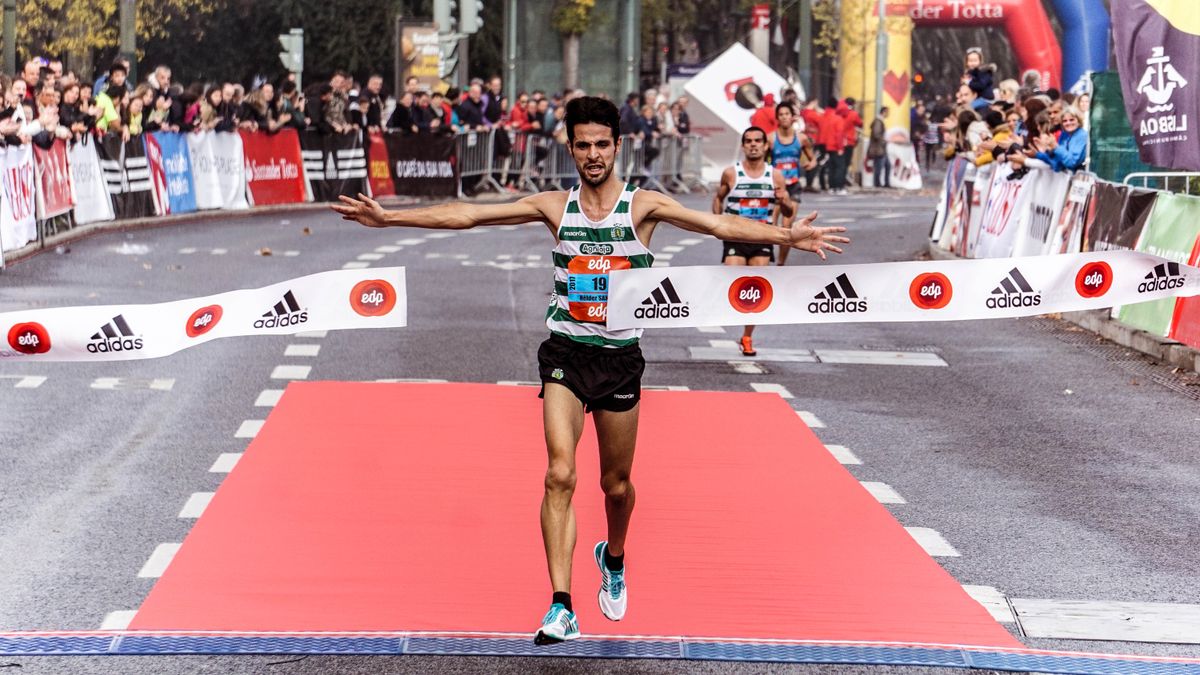
Back in the spring I ran a 22:00 5K on a flat local course — nothing special, just a solid effort on a cool morning. I plugged it into a race time predictor to see what it thought I could run for a marathon that fall, and it spat back 3:31:00. I trained for four months, toed the line in October, and crossed the marathon finish in 3:40:12. Nine minutes slower than the number a formula had promised me back in the spring.
That gap isn't the calculator being wrong. It's the calculator being honest about something most runners skip past: a race time predictor is a projection built on one equation, not a promise built on your training block. If you're deep in a fall marathon build right now — and if you've run a tune-up 5K or 10K in the last few weeks, there's a good chance you have — understanding exactly what that predicted number is (and isn't) telling you will save you from either sandbagging your goal pace or blowing up at mile 20 chasing one that was never realistic.
How the Riegel Formula Actually Predicts Your Race Time
A race time predictor estimates your finish time at one distance using a result you've already run at another distance. Enter a recent 5K, 10K, or half marathon time, and it projects a likely finish time for any other target distance — 10K, 15K, 10-mile, half marathon, or marathon.
The formula behind nearly every running calculator that does this is Riegel's formula, published by exercise physiologist Pete Riegel in a 1977 paper and still the standard endurance-prediction model used by coaches today.
- T1 is your known finish time
- D1 is the distance you ran it at
- D2 is the target distance you want a prediction for
- 1.06 is the fatigue exponent — it accounts for the fact that nobody holds their short-race pace over a longer one
Worked through with my actual numbers: a 22:00 5K (T1 = 22, D1 = 5 km), predicting a marathon (D2 = 42.195 km). The distance ratio is 8.44, raised to the 1.06 power gives a multiplier of about 9.60. Multiply that by 22 minutes and you land at roughly 211 minutes — 3:31:00, which is exactly what the calculator told me.
Key Takeaway
Riegel's formula doesn't assume you'll run the same pace for longer — the 1.06 exponent deliberately slows your predicted pace as distance increases, which is why per-km and per-mile splits get progressively slower the further out you predict.
Here's what that multiplier looks like across common race distances, all predicted from the same 22:00 5K effort:
| Target Distance | Distance Multiplier (vs. 5K) | Predicted Time |
|---|---|---|
| 10K (6.2 mi) | ×2.08 | 45:52 |
| 15K (9.3 mi) | ×3.20 | 1:10:29 |
| 10 Mile (16.1 km) | ×3.45 | 1:15:59 |
| Half Marathon (13.1 mi / 21.1 km) | ×4.60 | 1:41:12 |
| Marathon (26.2 mi / 42.2 km) | ×9.59 | 3:30:59 |
Run your own numbers with the Race Time Predictor — it runs this exact formula and shows pace per kilometer and per mile for every target distance at once.

Why the Prediction Gets Less Accurate the Bigger the Jump
Riegel's formula is most reliable when the target distance is close to your known distance, because it only accounts for pacing fatigue — not for whether you've actually trained the endurance to sustain that pace for the full target distance. A 5K-to-10K prediction is asking the formula to extrapolate across one extra 5K. A 5K-to-marathon prediction is asking it to extrapolate across 37 extra kilometers of a completely different physiological demand: glycogen depletion, fueling strategy, and hours on your feet that a 5K never tests at all.
That's the real reason my marathon came in nine minutes slower than predicted. My 5K fitness was genuinely there — the formula wasn't miscalculating the math. What it couldn't know is whether my long-run mileage, fueling, and pacing discipline over 26.2 miles would hold up as well as my raw speed suggested. For most recreational marathoners, they don't, by exactly this kind of margin.
| Jump Type | Example | Typical Real-World Accuracy |
|---|---|---|
| Small (similar effort duration) | 5K → 10K | Usually within 1–2% for a trained runner |
| Medium | 10K → half marathon | Within 3–5%, endurance-dependent |
| Large | 5K → marathon | Can drift 5–10%+ without a matching endurance base |
⚠️ Note
Treat a marathon prediction from a short race as a ceiling on what's possible with strong training — not a number you're entitled to on race day. The bigger the distance jump, the more the result depends on your training block, not the formula.
For UK and Australian readers used to thinking in kilometers rather than miles, the same principle applies regardless of unit — a 5 km parkrun time projecting to a 42.2 km marathon is still an 8.4× distance jump, and the accuracy gap scales with that ratio, not with which measurement system you use.

Using a Time Trial Instead of a Race Result
You don't need an actual race bib for the input number to work — a hard, honest time trial does the job, and it's the more practical option mid-training-block when the next real race is months away.
A time trial is a maximal, all-out effort run at a measured distance outside of a race — typically on a track or a certified route — used as a substitute for race data when calibrating pace or predicting fitness. For it to feed a useful prediction, it has to be run the way you'd race it: fully rested, properly warmed up, and paced flat-out for the whole distance, not eased into.
💡 Pro Tip
A track 5K or 10K time trial tends to give a cleaner input than a road one — no traffic lights, no downhill sections skewing your pace, and easy-to-verify distance. Run it two to three weeks out from your goal race so it reflects current fitness without adding fatigue this close to race day.
Whatever number you use, feed it into the Race Time Predictor rather than mentally scaling paces — the 1.06 exponent isn't linear, so eyeballing "half the distance means roughly half the time, plus a bit" undershoots the real slowdown at longer distances by a meaningful margin.
If you're pairing a goal time with actual training paces, the Running Pace Calculator converts any target finish time into your required pace per kilometer or mile, and heart rate zones from the Heart Rate Zones Calculator help you confirm your easy-day effort isn't secretly race-pace-adjacent.

Reading Your Predicted Time During Fall Marathon Training
Late August sits right in the middle of most fall marathon build-ups. Runners training for the Chicago Marathon (mid-October), the Marine Corps Marathon (late October), or the New York City Marathon (early November) are typically 8–12 weeks out — deep into peak mileage, and exactly the point where a recent tune-up 5K or 10K result is genuinely useful data, not just a number to obsess over.
The trap at this stage is anchoring your entire goal pace to the predictor's raw output instead of treating it as one input among several. A predicted marathon time assumes your long runs, fueling strategy, and taper are dialed in well enough to hold that pace for over three hours — which is a training and race-execution question, not a math question.
Key Takeaway
Use a fresh time trial or tune-up race prediction as your fitness ceiling, then discount it by 3–8% for a marathon goal — more if your longest training run has been under 32 km (20 miles), less if you've already run 32+ km comfortably and fueled properly during it.
For runners outside the US, the same three-race pattern shows up on other continents — the Berlin Marathon lands in late September, and Australia's fall/spring calendar runs on the opposite seasonal cycle entirely, so "fall marathon season" itself is a Northern Hemisphere framing worth adjusting for your own hemisphere's race calendar.

Frequently Asked Questions
How accurate is a race time predictor?
It's quite accurate for distances close to your known result — predicting a 10K from a 5K is usually within 1–2% for a trained runner. Accuracy drops the bigger the distance jump, since the formula only models pacing fatigue, not whether your endurance training matches the target distance.
Why does my predicted pace get slower for longer races?
Riegel's formula uses a 1.06 fatigue exponent that models the natural slowdown as distance increases. No runner can hold 5K pace for a full marathon, so the predicted per-kilometer and per-mile pace rises with each longer distance in the calculation.
Can I use a training run instead of a race result?
Yes, as long as it's run as a genuine maximal effort at a measured distance — an easy training run will give a falsely slow prediction. A hard time trial two to three weeks before your goal race tends to give the most reliable input.
Should I set my marathon goal pace directly from the predictor?
Treat it as an upper-fitness ceiling rather than a locked-in goal, especially when predicting a marathon from a much shorter race. Discount the predicted time by roughly 3–8% depending on your long-run mileage and fueling practice, and adjust further for race-day heat, hills, or wind.
Does the formula work the same for miles and kilometers?
Yes — Riegel's formula uses a ratio of distances, so it works identically whether you input times in miles or kilometers, as long as D1 and D2 use the same unit. A 5K-to-marathon jump is an 8.4× distance ratio regardless of which unit system you're working in.
Try It Yourself
A race time predictor gives you a real, formula-based ceiling for what your current fitness supports — not a guaranteed finish time, especially across a big distance jump like 5K to marathon. Run your own numbers with the Race Time Predictor, dial in your training paces with the Running Pace Calculator, and check your easy-day effort against the Heart Rate Zones Calculator before your next big build.