I Ordered 6 Tons of Gravel for My Driveway. I Needed Closer to 14 — Here's the Math I Skipped
Last October I stood at the end of my driveway, kicked a rut that had turned into a small stream after a week of rain, and decided to fix it before winter. I eyeballed the strip — about 12 feet wide and 40 feet long — and told the supplier, "Six tons should do it." The truck dumped six tons, I spread it, and it covered roughly the first 17 feet. The rest of the driveway was still mud. A second delivery, a second delivery fee, and a very sore back later, I finally sat down and did the math I should have done first.
If you're planning to calculate how much gravel you need for a driveway (or a path, a parking pad, or a shed base) before the ground freezes, this guide walks through the exact numbers: volume, depth, compaction, and the conversion from cubic yards to tons. By the end you'll be able to give a supplier a figure you can trust.
How Do You Calculate How Much Gravel You Need?
Gravel volume is the area you're covering multiplied by the depth of the layer, usually expressed in cubic yards (US) or cubic metres (UK, Australia and most of the world). Suppliers then convert that volume to weight, because most bulk gravel is sold by the ton or tonne.
The core formula is the same one used for concrete and mulch:
And the weight conversion:
Crushed stone typically weighs about 2,700–3,000 lb per cubic yard (roughly 1.35–1.5 tons), according to common landscape-supply conversion tables. Rounded river rock and pea gravel run a little lighter; wet or fine-grained material runs heavier. Always ask your supplier for the exact figure for the stone you're buying.

A Worked Example: My 12 × 40 ft Driveway
Here's the maths I skipped, step by step.
| Step | Calculation | Result |
|---|---|---|
| Area | 12 ft × 40 ft | 480 sq ft |
| Depth | 6 in = 0.5 ft | 0.5 ft |
| Volume | 480 × 0.5 | 240 cu ft |
| Cubic yards | 240 ÷ 27 | 8.89 yd³ |
| With 10% extra | 8.89 × 1.10 | 9.78 yd³ |
| Weight | 9.78 × 1.4 | ≈ 13.7 tons |
My "six tons" guess was off by more than half. At a typical $40–$50 per ton delivered, the correct order was around $550–$690 — and getting it in one delivery rather than two would have saved me a second delivery fee.
Key Takeaway
One cubic yard of gravel covers 324 square feet at 1 inch deep. Divide 324 by your depth in inches to get the coverage per yard — at 6 inches, that's just 54 square feet per cubic yard.
If you'd rather skip the arithmetic, plug your dimensions into our Gravel Calculator and it returns cubic yards, cubic metres and tons in one step.
How Deep Should Driveway Gravel Be?
Depth is the number most people underestimate, and it's the one that multiplies everything else. A decorative path is happy with 2 inches. A driveway that carries cars is a different job.
| Project | Typical depth | Notes |
|---|---|---|
| Garden path | 2 in (5 cm) | Pea gravel or decomposed granite |
| Parking pad | 4 in (10 cm) | Compacted crushed stone |
| Driveway | 6 in (15 cm) | 4 in base + 2 in surface |
| Soft or clay soil | 8–12 in (20–30 cm) | Add geotextile fabric underneath |
The standard residential recipe is a 4-inch compacted base of coarse crushed stone topped with a 2-inch layer of smaller surface stone. If your driveway sits on clay that holds water, thicker is cheaper than redoing it in two years.
💡 Pro Tip
Measure the depth in several spots before you order. My driveway sloped, and the low end needed nearly 8 inches to level out. Averaging three or four measurements gives a far better estimate than one.
Why Does Gravel Need a Compaction Allowance?
Compaction is the settling of loose aggregate into a denser layer under a plate compactor or vehicle traffic. Angular crushed stone typically compacts by 10–15%, which means a layer you spread at 6 inches ends up closer to 5.25–5.5 inches once it's packed down.
That's why the worked example above included a 10% buffer. If you want a finished compacted depth of 6 inches, order for about 6.5–7 inches loose. The extra is also your insurance against uneven subgrade, spillage at the edges and the inevitable bit that ends up on the lawn.
⚠️ Note
Time matters in autumn. Compact and settle the base while the ground is still workable — gravel spread onto frozen or saturated soil sinks unevenly and can be churned into mud by the first thaw.
Metric, UK and Australian Examples
The same driveway in metric is 3.6 m wide by 12 m long, with a 15 cm layer.
Crushed aggregate weighs roughly 1.6–1.7 tonnes per cubic metre loose, so:
| Region | Volume (+10%) | Approx. weight | Typical price |
|---|---|---|---|
| US | 9.8 yd³ | 13.7 tons | $40–$50 / ton |
| UK | 7.1 m³ | ≈ 11.4 tonnes | £30–£45 / tonne |
| Australia | 7.1 m³ | ≈ 11.4 tonnes | A$45–A$75 / tonne |
In the UK you'll often hear the base layer called "Type 1" sub-base (MOT Type 1), and in Australia "road base" or "crusher dust" for the finishing layer. The names change; the volume maths doesn't. Prices vary a lot by region and haulage distance, so treat the figures above as ballpark only.
Bulk Delivery vs Bagged Gravel
Bagged gravel looks convenient until you do the sum. A typical 0.5 cubic foot bag means my 240 cubic feet would need 480 bags. At roughly $5 each, that's $2,400 versus about $600 for bulk delivery.
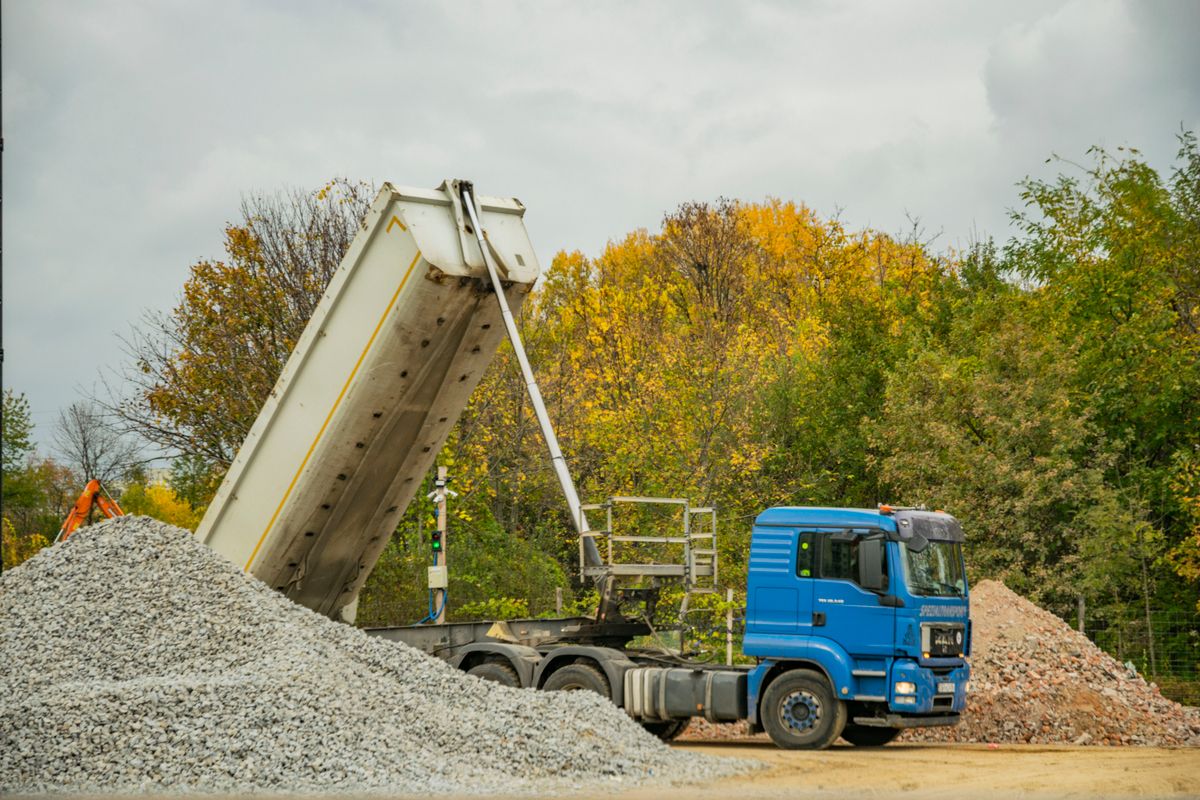
A rule of thumb: once a job passes 2–3 cubic yards, bulk delivery is almost always cheaper per unit, often by 50–70%. Before the truck arrives, check access, mark where the pile can go, and lay a tarp if it's going near a lawn. If you're also edging a bed or building raised planters nearby, our Garden Bed Calculator and Concrete Calculator use the same volume method, and the Mulch Calculator handles the soft landscaping around it.
⚠️ Disclaimer
This article is for informational purposes only and does not constitute professional construction or financial advice. Material weights, prices and depth requirements vary by region and soil type — confirm figures with your local supplier or a qualified contractor.
Frequently Asked Questions
How many tons of gravel do I need for a 12 × 40 ft driveway?
At a 6-inch depth, you need about 8.9 cubic yards, or roughly 12.4 tons. Adding 10% for compaction and waste brings the order to about 13.7 tons.
What's the difference between a ton and a tonne?
A US short ton is 2,000 lb (about 907 kg). A metric tonne is 1,000 kg (about 2,205 lb). Suppliers in the UK and Australia sell by the tonne, so don't mix the two when comparing quotes.
Can I spread gravel straight onto soil?
You can, but gravel gradually sinks into soft ground. A geotextile separator fabric under the base layer keeps the stone from mixing with the soil and noticeably extends the life of the driveway, especially over clay.
Should I order the stone as one size or two?
For a driveway, two is better: a coarse, angular base for strength and drainage, then a smaller surface stone for a smooth finish. Ask your supplier for the quantity of each, using the 4-inch and 2-inch split.
How much extra gravel should I order?
Ten percent is a sensible default for flat, well-prepared ground. Order 15% if the subgrade is uneven or you're compacting heavily. A small surplus is easy to use for patching; a shortfall means a second delivery fee.
Try It Yourself
Gravel is heavy, hard to return and priced per ton, so the order is the one step worth getting right. Measure the area, pick your depth, add a compaction buffer, and convert to tons before you call the supplier.
Run your numbers through the Gravel Calculator, then check related volumes with the Concrete Calculator, Garden Bed Calculator and Mulch Calculator.