How a Resistor Color Code Calculator Works
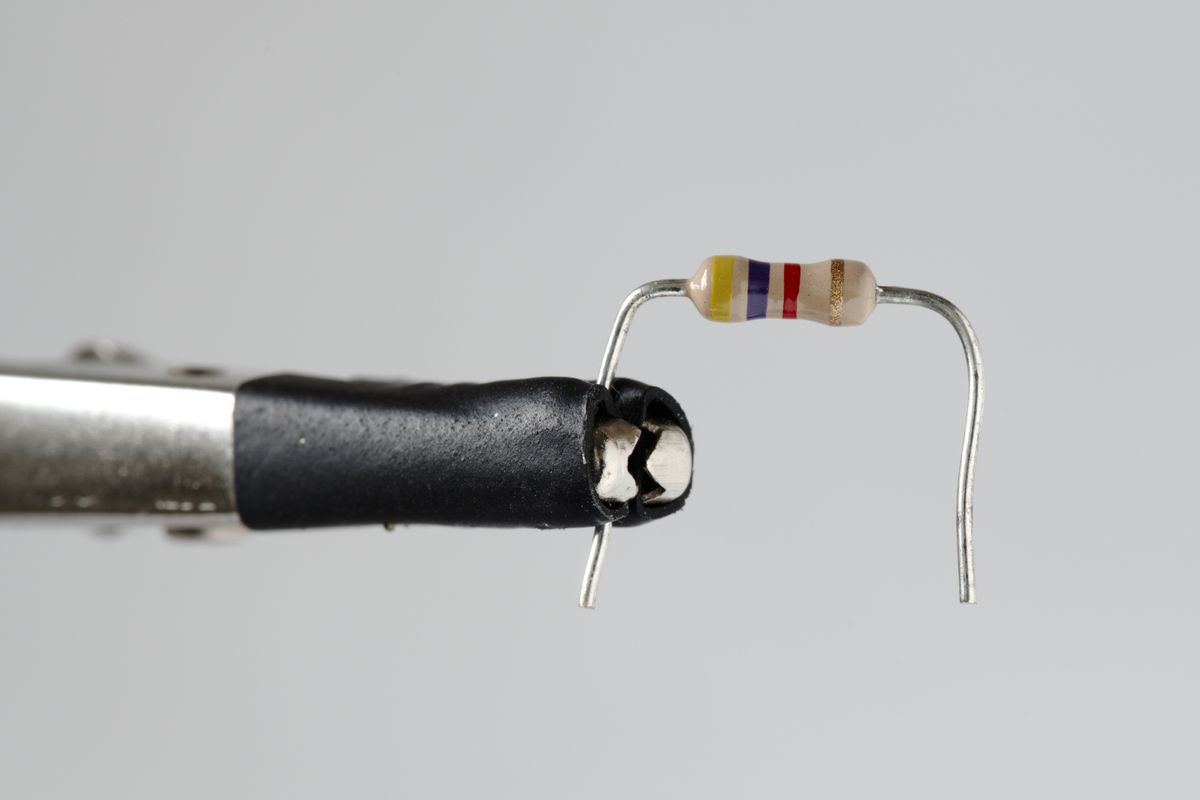
Through-hole resistors are too small to print numbers on, so manufacturers use a system of colored bands to encode the resistance value. A resistor color code calculator translates those bands back into a number for you, removing the need to memorize the color chart or do the multiplication by hand.
Each color maps to a digit from 0 to 9. On a 4-band resistor, the first two bands are significant digits, the third is a multiplier, and the fourth is the tolerance. A 5-band resistor adds a third significant digit, giving precision components the extra resolution they need.
The Resistor Color Code Formula
The resistance value is built from the digit bands and the multiplier, then a tolerance band defines how far the real value may deviate from the nominal value:
- 4-Band: Resistance = (Digit1 Digit2) × Multiplier
- 5-Band: Resistance = (Digit1 Digit2 Digit3) × Multiplier
- Range = Resistance ± (Resistance × Tolerance%)
Tips for Reading Resistor Bands
Reading resistors correctly is mostly about orientation and recognizing a few key colors. A handful of practical habits will keep you from misreading a value.
- Hold the resistor with the tolerance band — usually gold or silver — on the right so you read the digit bands first.
- Gold and silver only appear as multiplier or tolerance bands, never as significant digits, which helps confirm orientation.
- A single black band by itself indicates a zero-ohm jumper resistor.
- When in doubt, measure the resistor with a multimeter to confirm the decoded value.
Frequently Asked Questions
What is the difference between 4-band and 5-band resistors?
A 4-band resistor uses two significant digits plus a multiplier and tolerance band. A 5-band resistor adds a third significant digit, which allows for more precise values. Precision and low-tolerance resistors almost always use the 5-band scheme.
Which band do I read first?
Read from the band closest to one end toward the tolerance band, which is typically gold or silver and slightly separated from the others. If the tolerance band is on the left, flip the resistor around before reading.
What does the tolerance band tell me?
The tolerance band shows how much the actual resistance can vary from the printed value. A gold band means ±5% and silver means ±10%. Tighter tolerances such as ±1% (brown) are used in precision circuits where exact resistance matters.