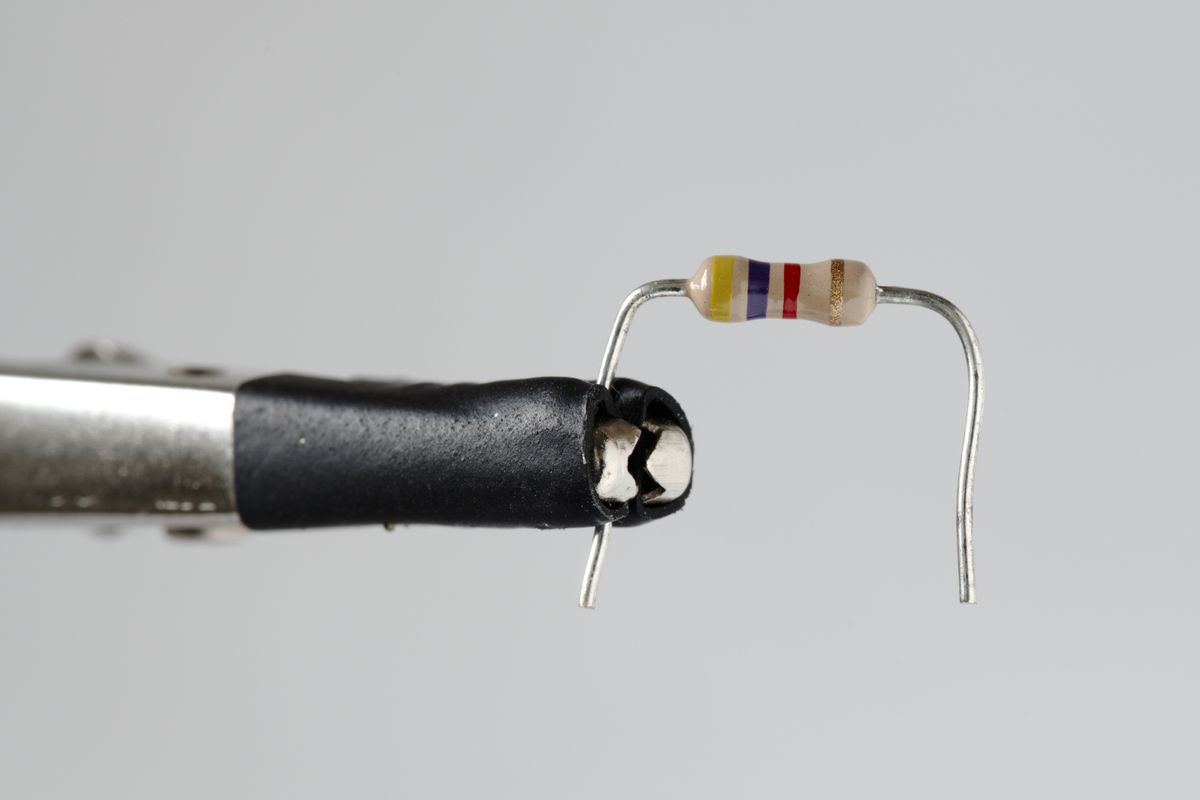
How a Voltage Divider Works
A voltage divider uses two resistors in series to produce an output voltage that is a fraction of the input voltage. It is one of the most fundamental circuits in electronics, used to scale down voltages for sensors, set reference levels, and interface components with different operating voltages.
Voltage Divider Formula
- Vout = Vin × R2 / (R1 + R2)
- Current (I) = Vin / (R1 + R2)
- Power in R1 = I² × R1
- Power in R2 = I² × R2
Frequently Asked Questions
When should I use a voltage divider?
Voltage dividers are ideal for low-current signal applications such as reading potentiometers, interfacing 5V sensors to 3.3V microcontrollers, and setting bias voltages. Avoid them for powering loads directly — the output voltage will drop under load if the load impedance is comparable to R2.
How do I choose resistor values?
Keep the total resistance (R1 + R2) small enough to limit load sensitivity but large enough to limit power dissipation. A good rule of thumb is to make the load impedance at least 10× the value of R2 to avoid significant output voltage sag.