How Many Drinks Actually Put You Over the Limit? The Math Behind BAC
⚠️ Disclaimer
This article is for informational and educational purposes only and does not constitute medical or legal advice. Blood alcohol content estimates are approximations and cannot account for individual metabolism, medication, food intake, or health conditions. Never use a BAC estimate to decide whether it is safe to drive. If you have been drinking, do not drive — call a taxi, use a rideshare, or ask a sober friend.
Four friends split a bottle and a half of wine over dinner. Three of them called a cab without a second thought. The fourth — bigger frame, hadn't had much to eat that day, convinced he'd "burned it off" walking to the restaurant — decided he was fine to drive the six minutes home. He wasn't close. Later, doing the actual maths on the Widmark formula for his weight and drink count, his estimated BAC came out well above 0.08%, not comfortably under it like he'd assumed.
That gap — between what a night of drinking feels like and what the number actually is — is exactly what a BAC calculator is built to expose. This article walks through how blood alcohol content is actually calculated, works the maths for a real 4-drink scenario, and explains why the same four drinks can leave one person legal to drive and another person well over the limit.
What Is BAC and How Do You Actually Calculate It?
Blood alcohol content (BAC) is the percentage of alcohol present in a person's bloodstream, expressed as grams of alcohol per 100 millilitres of blood. A BAC of 0.08% means 0.08 grams of alcohol per 100mL of blood — the legal driving limit in most of the United States, most Canadian provinces, and England, Wales, and Northern Ireland.
Nearly every BAC calculator, including ours, runs on some version of the Widmark formula, developed by Swedish physician Erik Widmark in the 1930s and still the standard model taught in toxicology today:
Breaking that down:
- Alcohol grams — total pure alcohol consumed. A standard US drink (12oz beer at 5%, 5oz wine at 12%, or 1.5oz spirits at 40%) contains about 14 grams of pure alcohol.
- r — the body-water constant, reflecting that alcohol distributes through body water, not fat: 0.73 for men, 0.66 for women (women have proportionally less body water on average).
- 0.015 × hours — the amount your liver has already metabolized, since the body eliminates alcohol at a fairly steady 0.015% BAC per hour for most adults.
Key Takeaway
BAC isn't just "drinks divided by time." It depends on total grams of alcohol, your body weight, your body-water percentage (which differs by sex), and how much time has passed since you started — five variables, not one. That's why "I only had four drinks" means something completely different for two different people.
How Many Drinks Actually Put You Over the Limit?
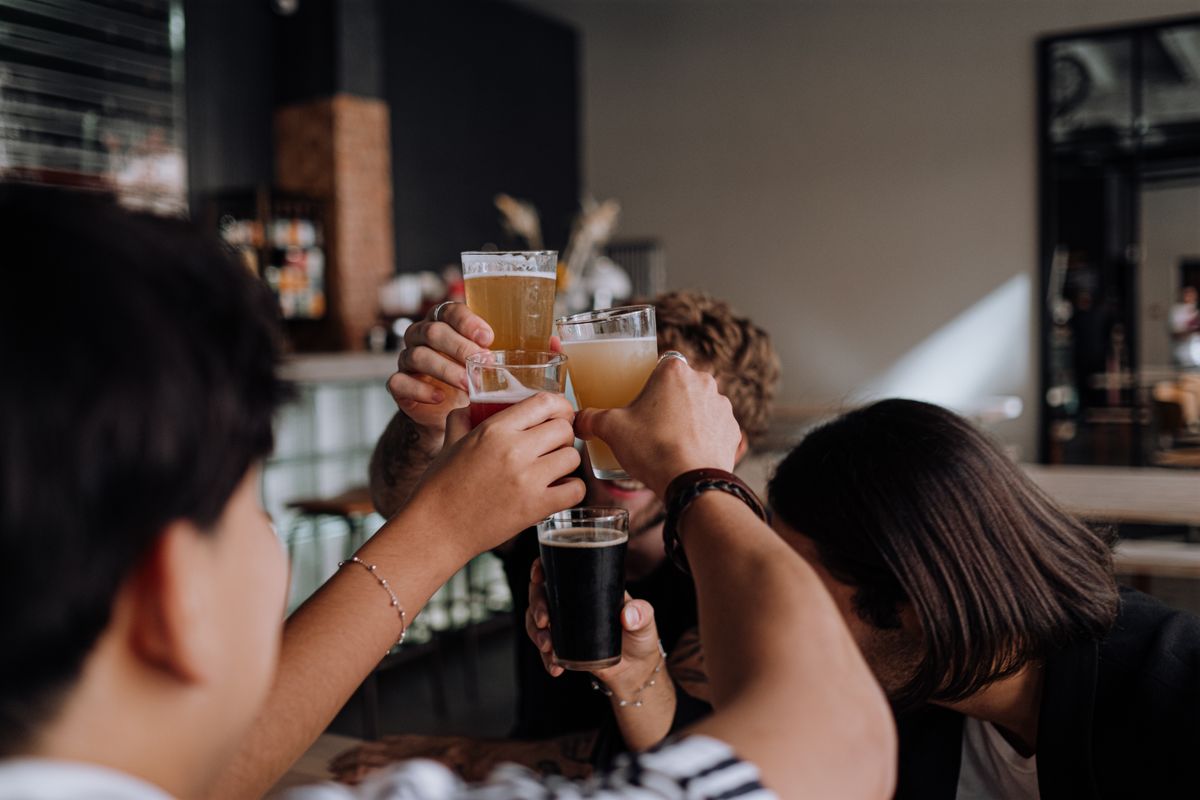
Let's run the real numbers for that dinner scenario: four standard drinks, one hour since the last one.
Person A — 180 lb (81.6 kg) man:
- Alcohol: 4 drinks × 14g = 56g
- BAC = (56 ÷ (81,650g × 0.73)) × 100 − (0.015 × 1)
- BAC = (56 ÷ 59,604.5) × 100 − 0.015
- BAC = 0.0940 − 0.015 = 0.079% — technically under 0.08%, but only barely, and well into impairment
Person B — 140 lb (63.5 kg) woman, same 4 drinks, same 1 hour:
- Alcohol: 56g (identical)
- BAC = (56 ÷ (63,500g × 0.66)) × 100 − 0.015
- BAC = (56 ÷ 41,910) × 100 − 0.015
- BAC = 0.1336 − 0.015 = 0.119% — nearly 50% over the legal limit
Same drinks, same night, same hour — a 0.04-point gap, which is the difference between "technically legal, still impaired" and "well over the limit." Neither person should have been driving, which is the point: impairment starts well before 0.08%. Reaction time and coordination measurably decline starting around 0.02–0.03% for most people.
| Legal Limit for Driving | Country/Region | BAC Threshold |
|---|---|---|
| Standard | USA, most of Canada, England/Wales/NI | 0.08% |
| Lower | Scotland, Australia, New Zealand | 0.05% |
| Zero-tolerance | Novice/P-plate drivers (AU/NZ), under-21 (USA) | 0.00–0.02% |
💡 Pro Tip
"Standard drink" sizes aren't universal. A US standard drink is 14g of pure alcohol; a UK unit is 8g; an Australian standard drink is 10g. If you're used to counting "units" in the UK, four US-sized pours will hit you harder than four units would — always check the alcohol percentage and pour size, not just the glass count.
Run your own numbers on the BAC Calculator — enter your weight, sex, and drinks, and it applies the Widmark formula automatically instead of you doing this arithmetic mid-evening.

Why the Same 4 Drinks Hit Two People Completely Differently
The 0.04-point gap between Person A and Person B above comes down to a handful of factors the Widmark formula captures — and a few it doesn't.
What the formula accounts for:
- Body weight. More body mass means more water to dilute the same amount of alcohol. A heavier person generally reaches a lower BAC on the same number of drinks.
- Sex. Women average a higher percentage of body fat and lower percentage of body water than men at the same weight, so the same alcohol dose concentrates into a smaller water volume — the reason the constant r differs (0.66 vs 0.73).
- Time elapsed. The 0.015%-per-hour elimination rate is roughly constant across the population, regardless of how "used to drinking" someone feels.
What it doesn't fully account for:
- Food in your stomach. Eating before or during drinking slows absorption, not elimination — it lowers your peak BAC and spreads it over more time, but doesn't change the total alcohol your body has to process.
- Genetics and liver health. Alcohol dehydrogenase enzyme levels vary meaningfully between individuals and ethnic groups, and conditions like liver disease slow elimination well below the average rate.
- Tolerance. Regular drinkers can feel less impaired at a given BAC due to behavioral tolerance, but their actual coordination and reaction-time impairment at that BAC is not meaningfully different — which is part of why "I feel fine" is such an unreliable gauge.
⚠️ Note
Coffee, cold showers, cold water, and "walking it off" do not lower BAC faster. The liver metabolizes alcohol at a fixed rate no outside intervention meaningfully speeds up. The only thing that reliably reduces BAC is time.
Why This Calculator Isn't (and Can't Be) a Legal Defense
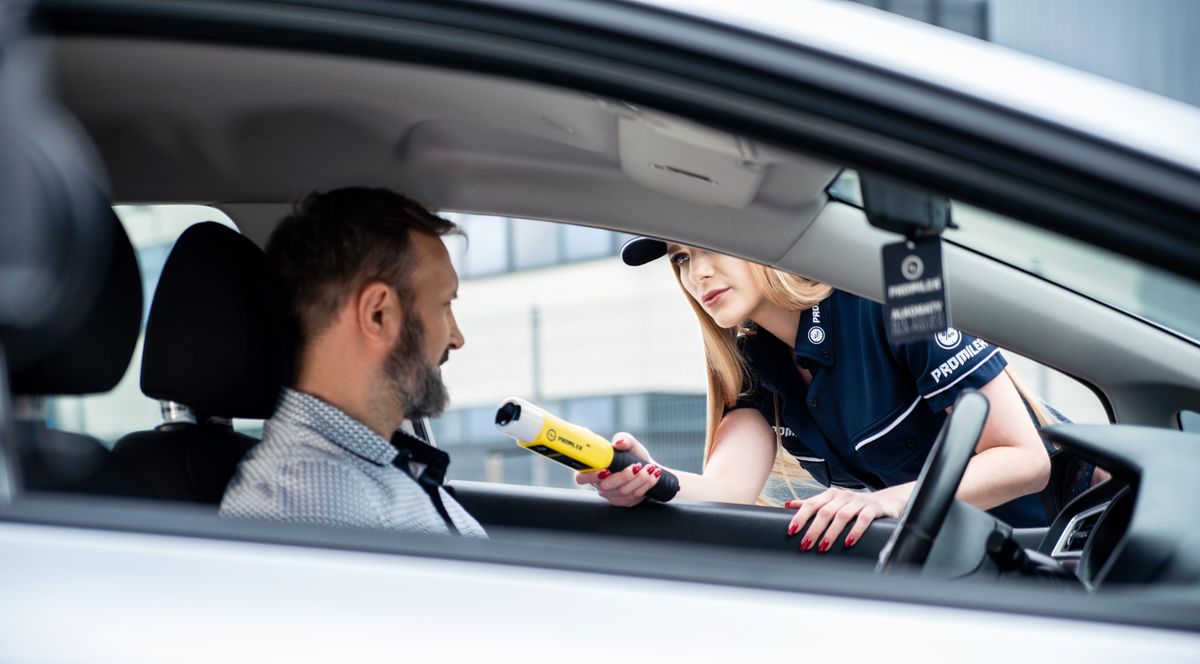
The National Highway Traffic Safety Administration (NHTSA) and equivalent bodies elsewhere rely on breathalyzers and blood tests for legal BAC determination precisely because the Widmark formula is a population-level estimate, not an individually verified measurement. It assumes an "average" body-water percentage for your sex, an even and complete absorption of alcohol, and a textbook elimination rate — none of which is guaranteed for any one specific person on any one specific night.
That means a calculator result of 0.075% doesn't mean you're "cleared" to drive — it means the average person with your inputs would land somewhere around there, with real individual variance in both directions. Combine that with the fact that judgment and reaction time are already measurably impaired well below the legal threshold, and the only genuinely safe number of drinks before driving is zero.
Key Takeaway
A BAC calculator is a planning and awareness tool — useful for understanding roughly how a night of drinking will affect you, or how long to wait before you're likely near zero. It is not a legal instrument, a breathalyzer substitute, or a green light to drive. When in doubt, don't drive.
Frequently Asked Questions
How many drinks does it take to reach 0.08%?
It depends entirely on body weight, sex, and time. As a rough guide, an average-weight man (around 180 lb / 82 kg) reaches roughly 0.08% after about 4 standard drinks in an hour, while an average-weight woman (around 140 lb / 63 kg) can reach that same level after only 2–3. These are population averages, not guarantees — use the BAC Calculator with your own numbers rather than relying on a rule of thumb.
Does eating food before drinking actually lower your BAC?
Food slows how quickly alcohol is absorbed into your bloodstream, which lowers your peak BAC and spreads the rise out over a longer period — but it does not reduce the total amount of alcohol your liver eventually has to process, and it does not speed up elimination. Drinking on a full stomach is safer than drinking on an empty one, but it is not a way to "cancel out" drinks.
How long does it take for BAC to reach zero?
At the standard elimination rate of about 0.015% per hour, a BAC of 0.08% takes roughly 5–6 hours to reach zero, and higher BACs take proportionally longer. A person who reaches 0.12% needs roughly 8 hours from their last drink to be fully sober — which is why "sleeping it off" for a few hours before driving the next morning can still leave measurable alcohol in your system.
Why do men and women reach different BAC levels from the same drinks?
The Widmark formula uses a body-water constant of 0.73 for men and 0.66 for women, reflecting that women on average have a higher percentage of body fat and lower percentage of body water at the same weight. Alcohol distributes through body water, so the same dose concentrates into a smaller volume in the average woman's body, producing a higher BAC from an identical number of drinks.
Is a BAC calculator accurate enough to decide if I can drive?
No. A BAC calculator provides an educational estimate based on population averages — it cannot measure your actual blood alcohol level the way a breathalyzer or blood test does, and it cannot account for your specific metabolism, medications, or health. Never use any calculator's output to decide whether you are fit to drive. If you have been drinking, arrange another way home.
Try It Yourself
The maths behind BAC is straightforward — the Widmark formula, your weight, your drinks, and time elapsed — but the result is personal in a way "just count your drinks" never captures. Use the BAC Calculator to run your own numbers with the same formula used above, and try the Alcohol Consumption Estimator for a quick, casual look at how a night of drinks adds up. Then remember what both tools are actually for: understanding the numbers, not deciding whether to get behind the wheel.