I Road-Tripped My EV and the 'Charging Is Basically Free' Math Fell Apart at the First Fast Charger
My home charging costs me about 4 cents a mile. I've tracked it for two years, and I've been smug every time someone asked whether an EV is really cheaper to run. Then I took a 600-mile summer road trip, plugged into a DC fast charger off the interstate, and watched the session end at $34.12 for adding 58% of a battery. That works out to roughly 17 cents a mile — more than four times what I pay overnight in my garage, and close enough to what a gas-powered SUV spends per mile that my "EVs are basically free to run" line quietly stopped being true for that leg of the trip.
The gap isn't a scam or a fluke pricing glitch. It's the predictable result of two very different electricity markets — residential rates versus commercial fast-charging rates — colliding with how EV charging actually gets priced. Once you see the math, the swings make sense, and you can plan a road trip (or just your weekly commute) around them instead of being surprised at the charger.
What Does It Actually Cost to Charge an EV?
The cost to charge an EV is the amount of energy added to the battery, divided by charging efficiency to account for conversion losses, multiplied by your electricity rate. Written as a formula, it looks like this:
Efficiency matters because not every kilowatt-hour pulled from the wall reaches the battery cells — some is lost as heat converting AC power to the DC power batteries store. Level 1 and Level 2 charging typically run 85–92% efficient; DC fast charging skips onboard AC-to-DC conversion and gets closer to 95%.
According to the U.S. Energy Information Administration, the average U.S. residential electricity rate was 18.83 cents per kWh as of April 2026 — but that single national number hides a lot. My home rate in the Pacific Northwest is under 12 cents; a friend in Connecticut pays over 30. In the UK, Ofgem's energy price cap put the typical variable-rate unit price for electricity at roughly 25–27 pence per kWh through 2026, and in Australia the default market offer varies by state but commonly sits between AU$0.28 and AU$0.40 per kWh.
Here's the worked example I run for my own car — a 75 kWh battery, charging from 20% to 100% (60% added) on a home Level 2 charger at 88% efficiency and a $0.19/kWh rate:
That's a full evening's charge, 45 kWh added to the battery, for under $10. Swap the electricity rate for Hawaii's roughly $0.46/kWh and the same charge jumps to about $23.50 — more than double, before you've changed a single thing about the car or the charger.
Key Takeaway
Where you charge and what rate you're paying matter as much as how big your battery is. The exact same 60% charge can cost anywhere from about $7 to over $25 depending on your local electricity rate alone.
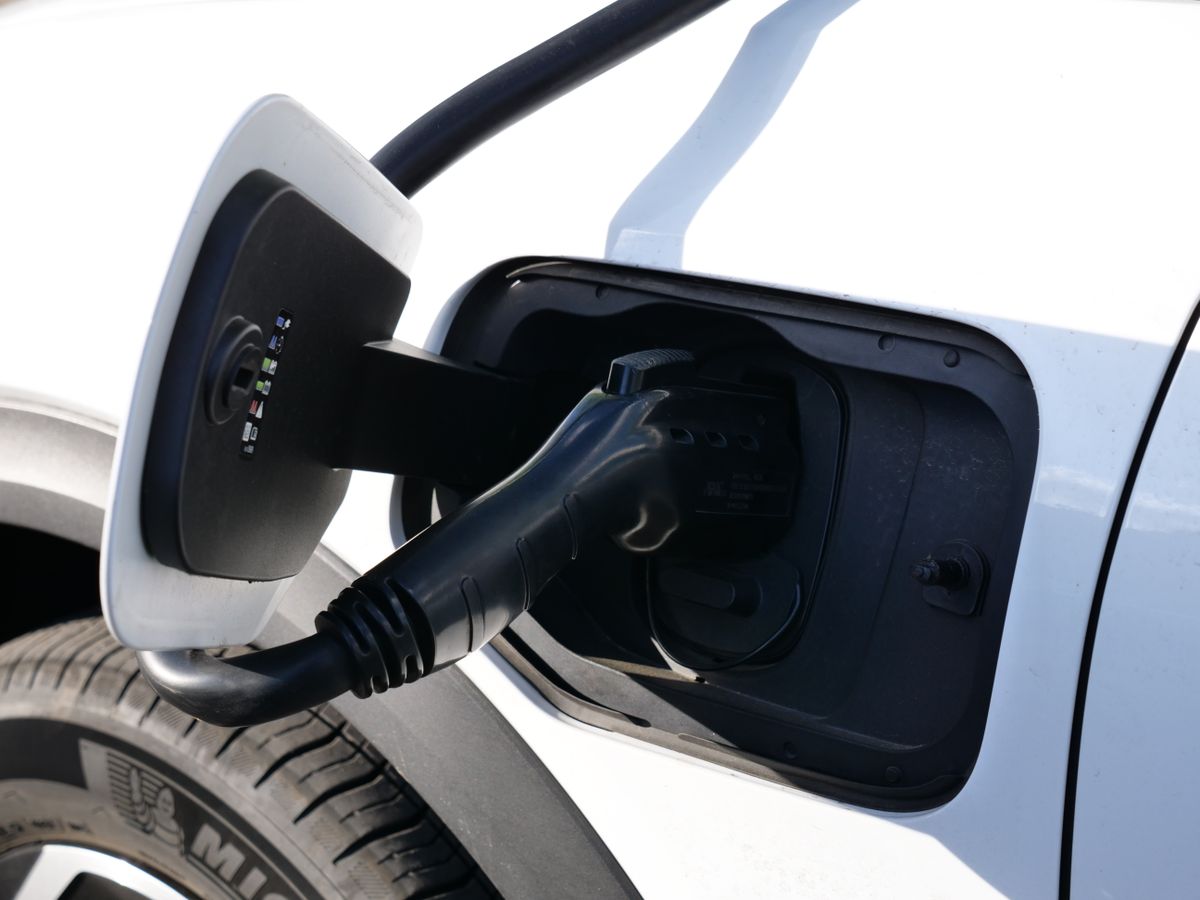
Home Charging vs Public Fast Charging: Where the Gap Comes From
Public DC fast charging isn't priced like your home electricity bill — it's priced like a retail product, with the station operator covering the cost of high-power hardware, real estate, grid upgrades, and "demand charges" that utilities bill commercial sites for drawing large amounts of power in short bursts. That's why a session at a highway fast charger routinely runs $0.30–$0.60 per kWh in the US, and often £0.60–£0.85 per kWh in the UK — roughly double to triple the equivalent home rate.
Run the same 45 kWh top-up from the earlier example through a DC fast charger at $0.42/kWh instead of $0.19/kWh:
That's roughly double the home-charging cost for the same energy, and DC fast sessions are usually shorter top-ups (10–80%, not 20–100%) because charging speed drops sharply above 80% to protect the battery — so the effective cost per mile on a road trip climbs even further once you factor in how often you're paying that premium rate.
| Charging method | Typical rate (US) | Typical rate (UK) | Cost for 45 kWh |
|---|---|---|---|
| Home Level 1/2 (off-peak) | $0.10–$0.15/kWh | £0.15–£0.20/kWh | $5–$8 |
| Home Level 1/2 (standard) | $0.17–$0.22/kWh | £0.24–£0.28/kWh | $9–$12 |
| Public Level 2 | $0.25–$0.35/kWh | £0.35–£0.50/kWh | $13–$18 |
| Public DC fast charging | $0.35–$0.60/kWh | £0.60–£0.85/kWh | $18–$32 |
⚠️ Note
Some networks charge per kWh, others charge per minute regardless of charging speed — a slower-charging car can end up paying more per kWh on a per-minute plan. Check the pricing model of the specific network before you plug in, not just the headline rate.

Is Charging an EV Actually Cheaper Than Gas?
On home electricity, yes, clearly — but on public fast charging, the margin shrinks dramatically and can occasionally disappear. The U.S. Department of Energy tracks an "eGallon" figure comparing the cost of driving on electricity to driving the same distance on gasoline; as of early 2026 it consistently showed home EV charging at roughly a third to a quarter the cost per mile of gasoline, nationally.
Let's put real numbers next to each other for a 300-mile stretch of driving, comparing an EV averaging 3.5 miles/kWh to a gas car averaging 30 mpg:
| Scenario | Cost basis | Cost for 300 miles |
|---|---|---|
| EV, home charging | $0.19/kWh ÷ 3.5 mi/kWh | ~$16.30 |
| EV, DC fast charging | $0.42/kWh ÷ 3.5 mi/kWh | ~$36.00 |
| Gas car, 30 mpg | $3.50/gallon ÷ 30 mpg | ~$35.00 |
| Gas car, 30 mpg (UK, £/litre) | £1.48/litre × 4.55 L/gal ÷ 30 mpg | ~£22.40 |
On home power, the EV wins by a wide margin. But line up EV fast-charging against gasoline and the gap nearly closes — on that stretch of my road trip, the fast-charging session cost almost exactly what the SUV in the next lane was paying at the pump. That's the number that surprised me, and it's the number most "EVs are so much cheaper" claims skip over, because they're quietly assuming you only ever charge at home.
💡 Pro Tip
The real lifetime savings from EV ownership come overwhelmingly from home charging, not public fast charging. If most of your driving is local and chargeable overnight, the economics stay strongly in your favor even if the occasional road trip session costs close to gas.
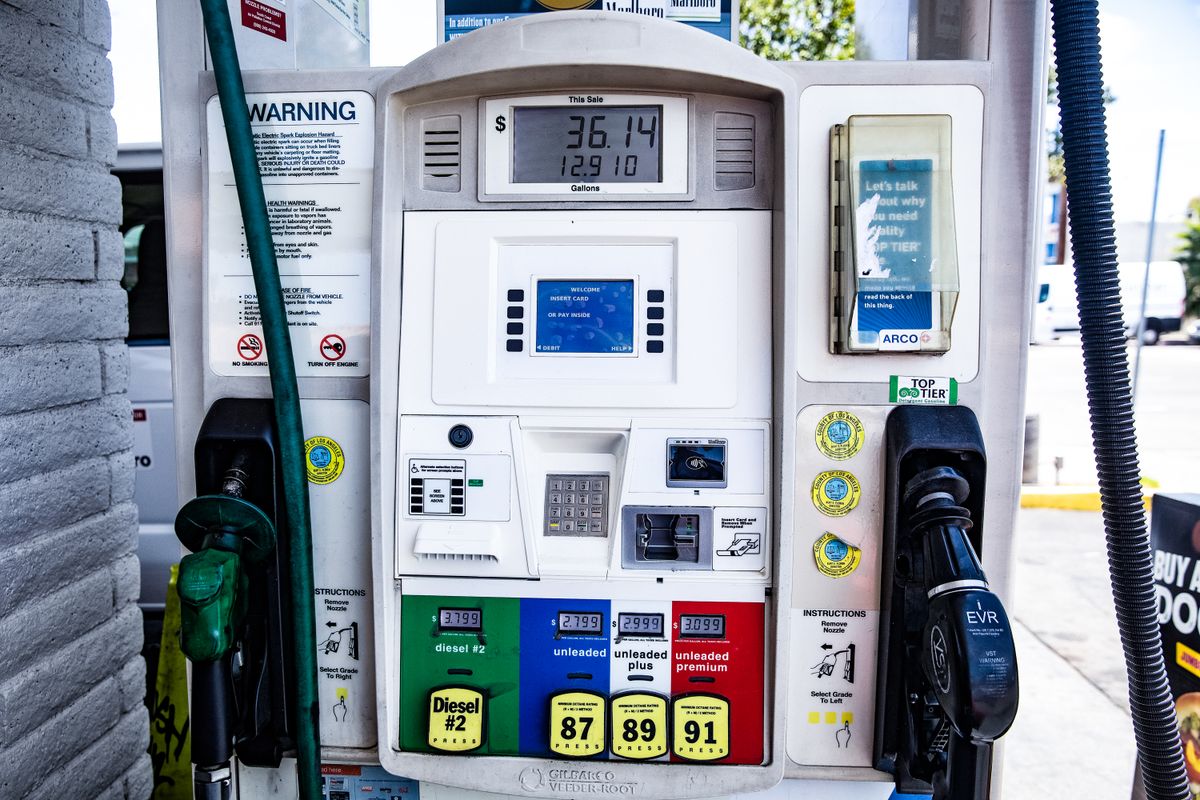
How to Keep Your Road Trip Charging Bill Down
A few habits made a real difference on the rest of my trip, and on every trip since:
- Charge to 80%, not 100%, on fast chargers. Charging speed tapers sharply above 80% to protect the battery, so the last 20% takes disproportionately long and, on a per-minute pricing plan, disproportionately more money. It's almost always cheaper and faster to stop twice at 20–80% than once at 10–100%.
- Route around the most expensive networks when you can. Fast-charging prices vary by network and even by individual station — some road-trip planning apps show live per-kWh pricing before you commit to a stop.
- Join a charging network's membership plan if you fast-charge regularly. Many networks offer a monthly subscription that cuts the per-kWh rate meaningfully — worth it if you take more than one or two road trips a year.
- Top up at your destination, not just en route. Charging at a hotel or relative's house overnight, even on a standard Level 1 outlet, is usually far cheaper than any public option and can cover the next day's driving without a fast-charging stop at all.
- Check your home utility for an EV or off-peak rate plan. Many utilities offer a discounted overnight rate specifically for EV charging that can cut your home charging cost by 30–50% compared to the standard rate.
Key Takeaway
The single biggest lever on your EV's running cost isn't the car — it's how much of your charging happens at home versus on the road. Planning a trip around fewer, longer fast-charging stops (rather than many short ones) also reduces the time lost to the steep taper above 80%.

Frequently Asked Questions
Why is public EV charging so much more expensive than home charging?
Public charging stations, especially DC fast chargers, are priced as a commercial service — the operator has to cover expensive high-power hardware, real estate, and utility demand charges for drawing large amounts of power quickly. Home electricity is billed at your standard residential rate, with none of that overhead built in.
Is it still worth buying an EV if I don't have home charging?
It can be, but the cost savings shrink considerably. Without home charging, you're paying public rates for most or all of your energy, which narrows — and on the most expensive fast-charging networks can nearly erase — the per-mile cost advantage over a fuel-efficient gas car. Workplace charging or a nearby public Level 2 charger at a discounted rate can help close that gap.
Does cold or hot weather change EV charging cost?
Yes. Extreme temperatures reduce charging efficiency and range, because the car spends extra energy heating or cooling the battery pack to its optimal operating temperature. Expect charging costs and time to both increase somewhat in very cold winter conditions or during peak summer heat compared to mild weather.
Why did my fast-charging session cost more per kWh than the advertised rate?
Some networks bill per minute rather than per kWh, so a car that charges more slowly (due to cold weather, an aging battery, or charging above 80%) ends up paying for more minutes to get the same energy — effectively a higher cost per kWh than a faster-charging car on the same plan.
How much does a full home charge typically cost in 2026?
For a common 60–75 kWh battery charging from roughly 20% to 100% at the 2026 U.S. average residential rate of about $0.19/kWh, expect somewhere between $8 and $12, depending on your charger's efficiency. Enter your own battery size and local rate into the calculator below for an exact figure.
Try It Yourself
The formula is simple, but the rate you plug in changes everything — and that rate swings by 2–4x depending on whether you're charging in your garage overnight or at a highway fast charger mid-road-trip.
Use the EV Charging Cost Calculator to enter your battery size, charge level, charger type, and local electricity rate, and see your exact cost, charging time, and added range.
Also worth checking:
- Electricity Cost Calculator — to see what your home charger is really adding to your power bill
- Fuel Economy Converter — to compare your old gas car's mpg against an EV's miles-per-kWh on equal footing
- Auto Loan Calculator — to see how a new EV's monthly payment compares once fuel savings are factored in