I Fried an LED Because I Misread a Resistor's Multiplier Band — Here's How to Read Color Codes Correctly
I was wiring up a simple LED indicator for a weekend project — a 9V supply, a standard 5mm red LED, and a resistor I pulled from an unsorted parts drawer I'd been meaning to organize for months. I read the bands under a dim desk lamp, decided it was orange-orange-brown-gold (330Ω), and clipped it in. The LED flashed white-hot for about half a second, there was a faint pop, and the smell of burnt plastic told me the rest of the story before I even looked at it. The resistor wasn't 330Ω. It was 33Ω — orange-orange-black-gold — and in bad lighting, a black band and a dark brown band look almost identical.
Key Takeaway
A resistor color code is read as a sequence of colored bands, each representing a digit, a multiplier, or a tolerance — and misreading just one band, especially a multiplier, can change a resistor's value by a factor of 10 or more.
This article walks through exactly how 4-band and 5-band resistor color codes work, using that fried LED as the worked example, so you can decode any resistor correctly the first time — whether you're sorting a mixed parts bin, prototyping a circuit, or just trying to double-check a value before you power something on.
What Is a Resistor Color Code and Why Does It Exist?
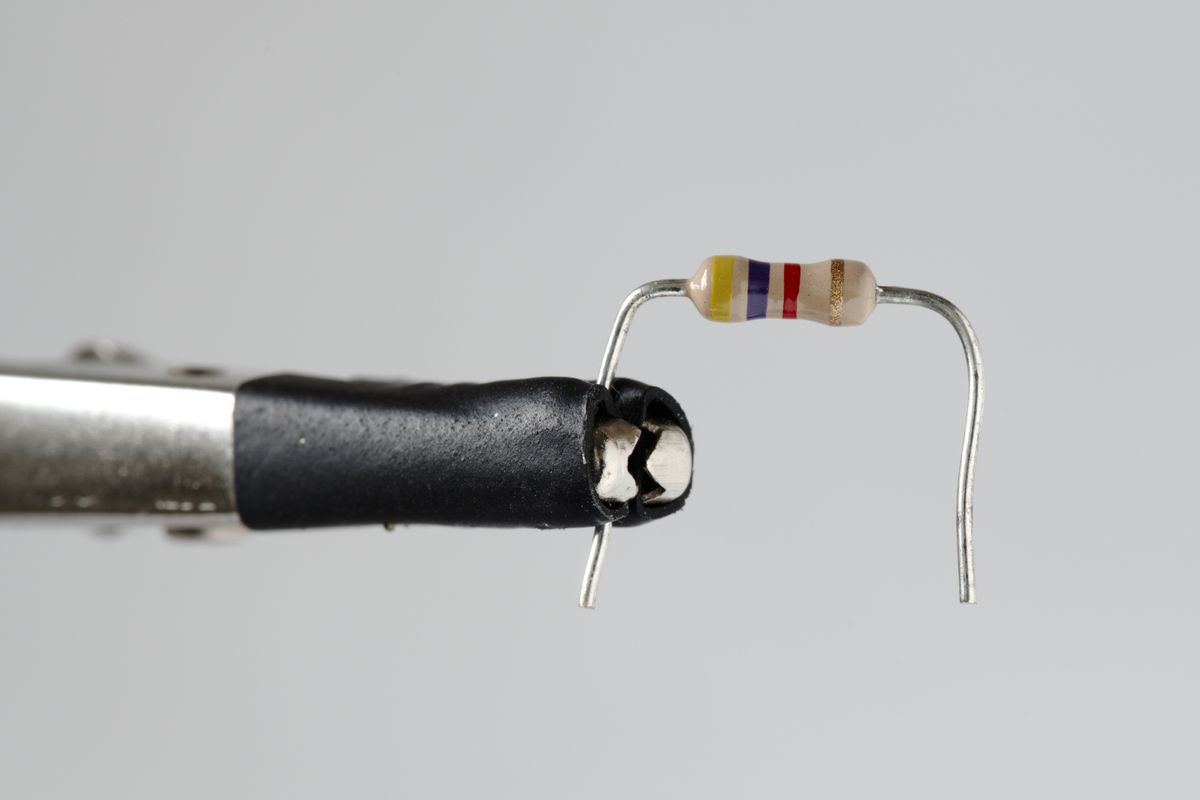
A resistor color code is a standardized system of colored bands printed on a resistor's body that encodes its resistance value, in ohms, along with its tolerance. The system exists because through-hole resistors are usually only a few millimeters long — far too small to print readable numbers on — so manufacturers settled on colored stripes instead. The convention is defined internationally under IEC 60062, which is why a resistor made in any country reads the same way.
Each color stands for a digit from 0 to 9, and the same ten colors are reused across three different roles depending on where they sit in the sequence: as a significant digit, as a multiplier (a power of ten to multiply the digits by), or as a tolerance (how far the actual resistance may vary from the printed value).
| Color | Digit | Multiplier | Tolerance |
|---|---|---|---|
| Black | 0 | ×1 | — |
| Brown | 1 | ×10 | ±1% |
| Red | 2 | ×100 | ±2% |
| Orange | 3 | ×1,000 | — |
| Yellow | 4 | ×10,000 | — |
| Green | 5 | ×100,000 | ±0.5% |
| Blue | 6 | ×1,000,000 | ±0.25% |
| Violet | 7 | ×10,000,000 | ±0.1% |
| Gold | — | ×0.1 | ±5% |
| Silver | — | ×0.01 | ±10% |
The Mistake: How a Misread Multiplier Band Fried My LED
Before touching the resistor, I'd actually done the math correctly. A standard red LED has a forward voltage of roughly 2V and a typical safe operating current of 20mA. Running it off a 9V supply, the resistor needs to absorb the leftover voltage:
The nearest standard value above that is 330Ω, so I grabbed a resistor I expected to be orange-orange-brown-gold — 33, times 10, equals 330Ω. What I actually grabbed was orange-orange-black-gold: 33, times 1, equals 33Ω. Under my desk lamp, the dark brown multiplier band and the black multiplier band looked close enough that I didn't think twice.
That 10x error in resistance meant a 10x error in current. Plugging 33Ω into the same formula, rearranged for current:
212mA through an LED rated for roughly 20-30mA is more than ten times its safe operating current — enough to destroy the semiconductor junction almost instantly, which is exactly what happened. The LED Resistor Calculator runs this exact forward-voltage-and-current math for you, so you can check a resistor value against a specific LED and supply voltage before you power anything on, rather than trusting a quick glance at the bands.
⚠️ Note
Black and brown multiplier bands are the single most common resistor color code misread, especially under warm or dim lighting. When a resistor's value seems unusually low for what it's labeled or sorted as, double-check the multiplier band under bright, neutral light before trusting it.
How Do You Read a 4-Band Resistor?
A 4-band resistor encodes its value using two significant digits, one multiplier, and one tolerance band, in that order, read from the end closest to the first digit band toward the tolerance band on the far side.
- Orient the resistor. The tolerance band — almost always gold or silver, and typically set slightly apart from the others — should be on the right. If you can't tell which end is which, look for it; gold and silver never appear as digit bands.
- Read the first two bands as digits. These form a two-digit number, e.g., orange-orange reads as "33."
- Read the third band as the multiplier. Multiply your two-digit number by the power of ten that color represents.
- Read the fourth band as tolerance. Gold means ±5%, silver means ±10% — this tells you the acceptable range around the nominal value.
A worked example: brown-black-red-gold reads as 1, 0, ×100, ±5% — giving 10 × 100 = 1,000Ω (1kΩ), with an acceptable range of 950Ω to 1,050Ω. If you'd rather not do the lookup and arithmetic by hand every time, the Resistor Color Code Calculator lets you pick each band's color from a dropdown and instantly returns the resistance, tolerance, and min/max range.
💡 Pro Tip
A classic mnemonic for the digit order (0-9) is "Bad Boys Race Our Young Girls, But Violet Generally Wins" — Black, Brown, Red, Orange, Yellow, Green, Blue, Violet, Gray, White. It's dated, but it's genuinely faster than looking up the chart once it sticks.
What Changes With a 5-Band Resistor?
A 5-band resistor color code adds a third significant digit before the multiplier band, which gives it finer resolution than a 4-band resistor can express. Where a 4-band resistor can only step between values like 33Ω and 34Ω in increments defined by two digits, a 5-band resistor can land precisely on values like 332Ω — a distinction that matters in precision analog circuits, sensor bridges, and instrumentation where a 5% tolerance introduces too much error.
5-band resistors are also where the tighter tolerance colors show up: brown (±1%), red (±2%), green (±0.5%), blue (±0.25%), and violet (±0.1%) are the tolerance bands you'll see on precision parts, whereas 4-band resistors almost always end in gold or silver.
Worked example: brown-black-black-red-brown reads as 1, 0, 0, ×100, ±1% — giving 100 × 100 = 10,000Ω (10kΩ), accurate to within ±100Ω. Swap the tolerance band to gold and it's still 10kΩ, just with a much wider ±5% (±500Ω) acceptable range.

What Does the Tolerance Band Actually Tell You?
Tolerance is the manufacturer's guaranteed maximum deviation between a resistor's printed (nominal) value and its actual measured resistance, expressed as a percentage. A 1kΩ resistor with ±5% tolerance (gold) could genuinely measure anywhere from 950Ω to 1,050Ω straight out of the packet and still meet spec — that's not a defect, it's the normal manufacturing variance the tolerance band is telling you to expect.
This matters most in circuits where a specific current or voltage needs to land within a narrow range — an LED near its maximum rated current, a voltage divider feeding a sensitive input, or a precision op-amp gain stage. In those cases, a resistor's ±5% or ±10% wiggle room can be the difference between a circuit that works reliably and one that's marginal on some units and not others.
Key Takeaway
Standard resistor tolerances follow the E-series preferred value system — E24 (±5%) and E96 (±1%) are the most common — defined under IEC 60063. This is why you'll find 330Ω and 3.3kΩ resistors readily available but never a 300Ω or a 3.5kΩ; only certain values in each decade are manufactured.
Use the Voltage Divider Calculator or Ohm's Law Calculator alongside the tolerance percentage when a circuit is sensitive to exact values, so you can see the real-world range a resistor's variance could produce rather than assuming the printed number is exact.
Common Color Code Mistakes (and How to Avoid Them)
Beyond the black-versus-brown multiplier mix-up that cost me an LED, a handful of other misreads come up constantly for beginners and experienced hobbyists alike:
- Reading from the wrong end. Starting from the tolerance band instead of the digit bands flips the whole value. Always find the gold or silver band first and read away from it.
- Confusing red and orange under warm lighting. Both can look similar under incandescent or yellow-toned LED lighting — read resistors under daylight-balanced light when the value matters.
- Mistaking a faded or dirty band for a different color. Older or dusty resistors can shift in apparent hue; a quick wipe with a cloth before reading avoids a lot of guesswork.
- Assuming a 4-band read on a 5-band resistor. A 5-band resistor has an extra digit band, so reading it as 4-band shifts every subsequent band's meaning by one position and produces a wildly wrong value.

⚠️ Note
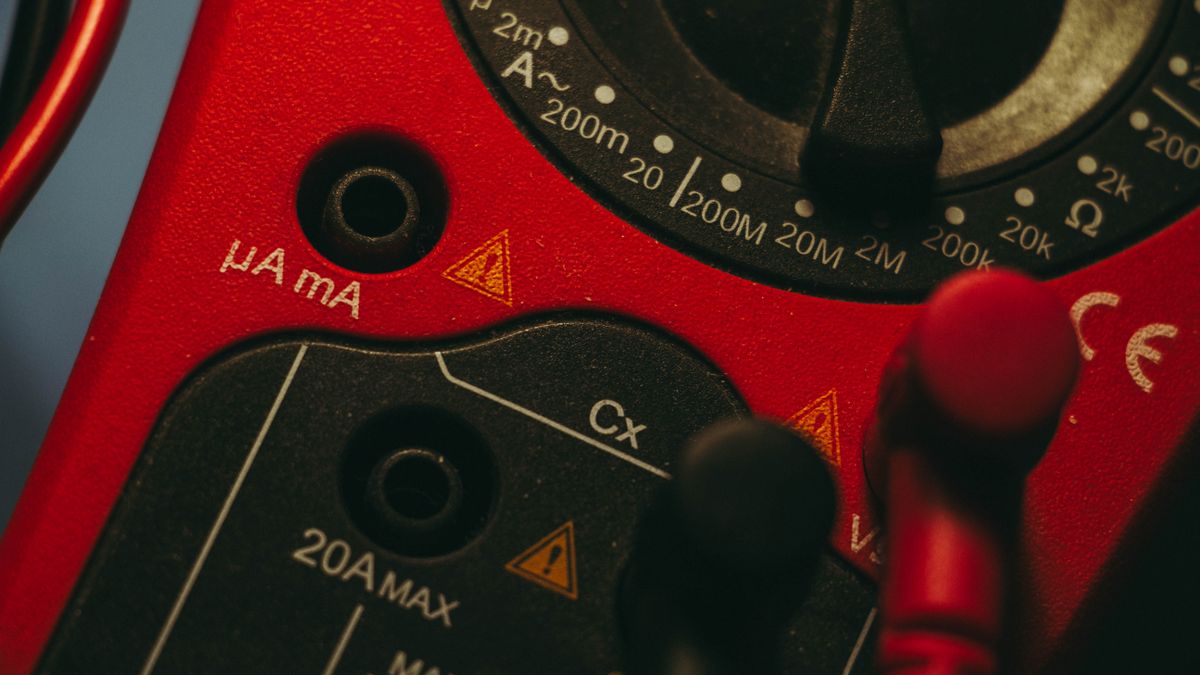
Color-blindness affects roughly 1 in 12 men and 1 in 200 women, and red-green color blindness in particular can make several resistor band colors genuinely indistinguishable. A digital multimeter's resistance (Ω) setting is the reliable fallback whenever the bands are ambiguous for any reason — visual or otherwise.
The most reliable habit, regardless of how confident you are reading bands, is to verify with a multimeter before a resistor goes into a circuit that has a component with a tight tolerance for damage — LEDs, transistors, and low-current sensor lines all fall into that category.
Frequently Asked Questions
Why do black and brown multiplier bands look so similar?
Both are dark, low-saturation colors, and the visual difference between them shrinks further under warm or dim lighting, on a small resistor body, or when the resistor is slightly dirty or aged. It's consistently one of the most common resistor color code misreads, which is exactly what caused the LED failure described above — always check the multiplier band under bright, neutral lighting.
Can I trust the resistor's printed value instead of reading the bands?
Most through-hole resistors don't have a printed numeric value at all — the color bands are the only marking. Larger power resistors sometimes do print the value directly on the body, but for standard small-signal resistors, the color code is the only source of truth short of measuring it.
How do I know if a resistor is 4-band or 5-band?
Count the bands. A 4-band resistor has two digit bands, one multiplier, and one tolerance band (4 total). A 5-band resistor adds a third digit band (5 total). 5-band resistors are more common on precision components with tolerances tighter than ±5%.
What does a single black band mean?
A resistor with a single wide black band (and no other visible bands) is a zero-ohm jumper resistor, used on circuit boards as a wire link rather than as a true resistive element — often placed there so the board can be assembled on the same production line regardless of whether that link needs to be present.
Is resistor color coding the same standard everywhere in the world?
Yes. Resistor color coding is standardized internationally under IEC 60062, which is why a resistor manufactured in any country uses the same colors, digit values, and band order. The preferred resistance values themselves (which specific numbers get manufactured, like 330Ω or 3.3kΩ) follow the related IEC 60063 E-series standard.
Try It Yourself
A misread multiplier band turned a safe 330Ω resistor into a 33Ω one and cost me an LED in under a second — the kind of mistake that's completely avoidable once you know exactly which band does what. Next time you're sorting a parts bin or double-checking a value before powering up a circuit, don't guess.
Use the Resistor Color Code Calculator to select each band's color and get the resistance, tolerance, and min/max range instantly.
Also worth checking:
- LED Resistor Calculator — find the exact resistor value your LED needs for a given supply voltage and current
- Resistor Calculator — work out series, parallel, and combined resistor values
- Ohm's Law Calculator — check voltage, current, and resistance relationships in any circuit
- Voltage Divider Calculator — see how resistor tolerance affects a divider's real-world output voltage