I Swapped a 103 for a 104 Building a Pedal Kit — Here's How Capacitor Codes Actually Work
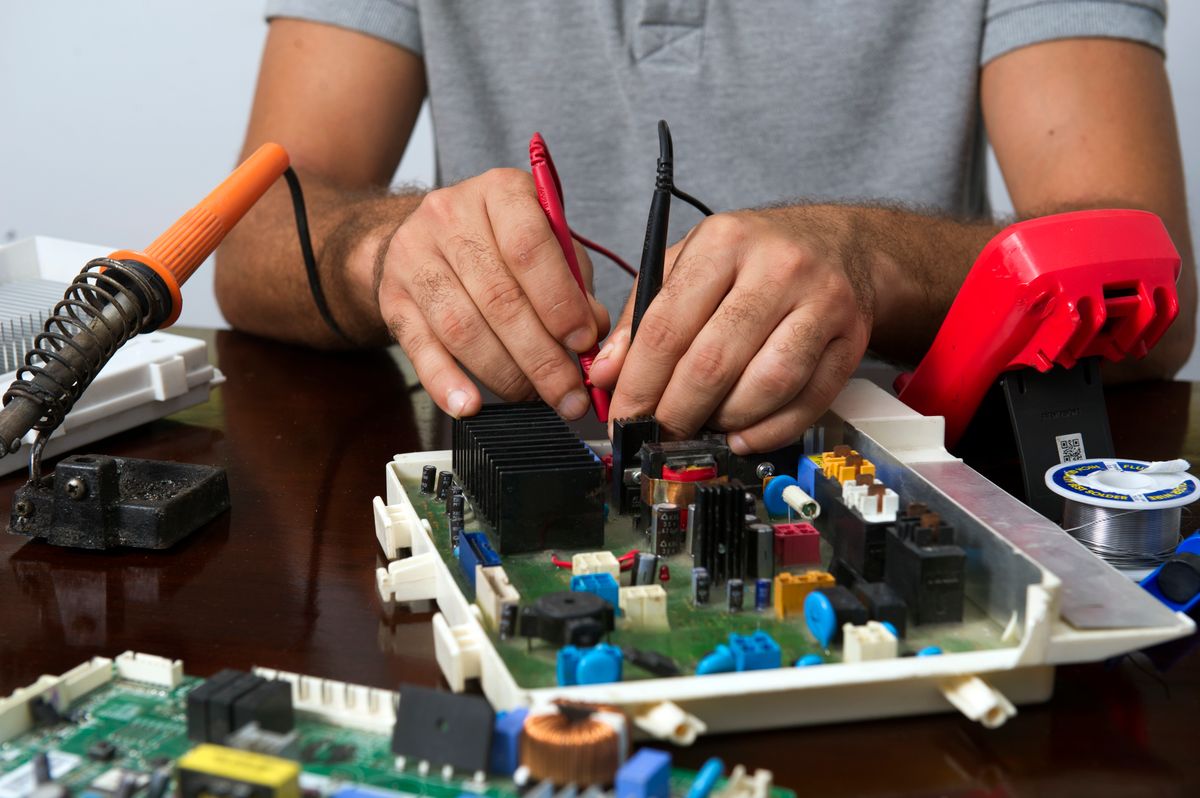
I built a distortion pedal kit off my workbench last month — one of the popular clone kits where every part comes in its own little labeled bag. Two of those bags held ceramic capacitors that, to the naked eye, are identical: same tan disc, same size, tiny black print you need a loupe or a phone camera zoomed in to actually read. One bag said "103" and the other said "104." I grabbed from the wrong bag for the tone-stage capacitor, soldered it in, closed up the enclosure, and plugged in. The pedal worked — technically. But the tone knob did almost nothing. Turn it fully dark or fully bright and the sound barely moved. I spent twenty minutes convinced I'd botched a solder joint before I popped the enclosure back open and actually read the part under a bright light: 103, not 104. Ten times smaller than it should have been.
What Is a Capacitor Code and Why Does It Look Like a Random Number?
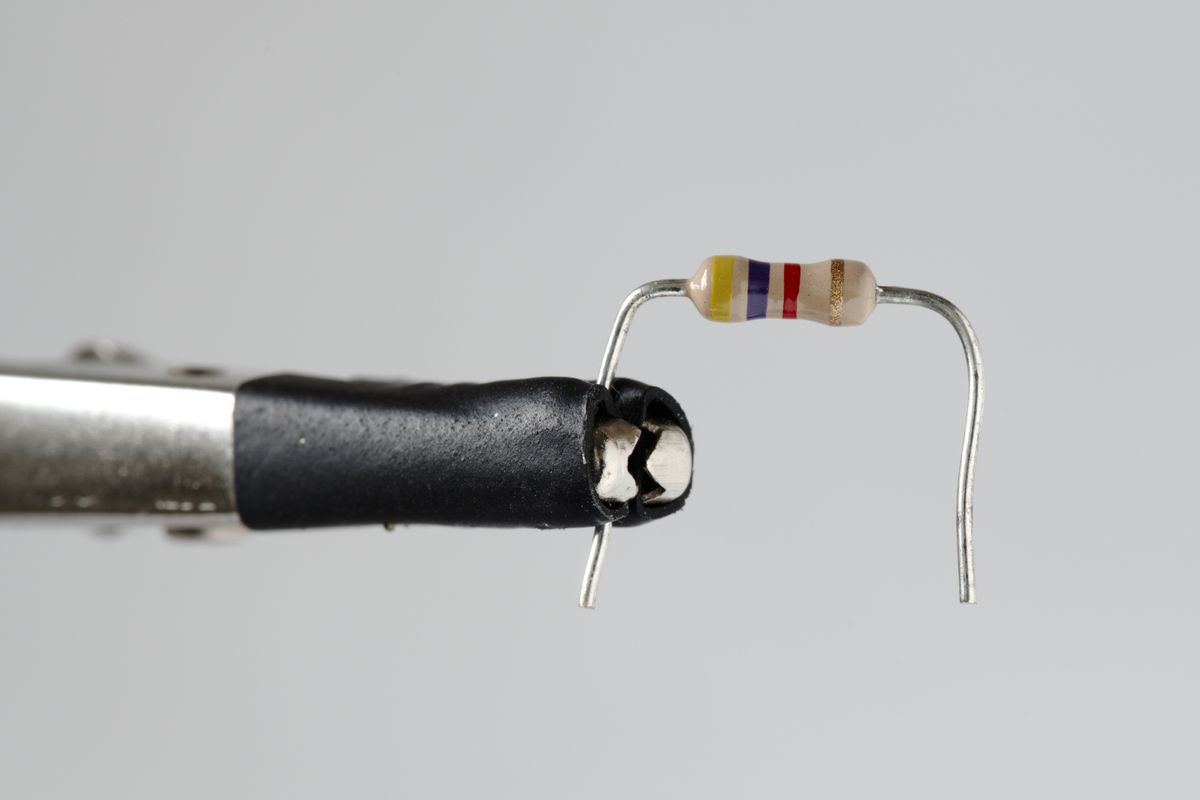
A capacitor code is a short numeric marking — usually two or three digits, sometimes with a trailing letter — printed on a small capacitor's body to encode its capacitance value in picofarads (pF). It exists for the same reason resistor color bands exist: the part is physically too small to print a full value like "0.1 µF" in legible text, so manufacturers settled on a compact shorthand instead, standardized under EIA-198.
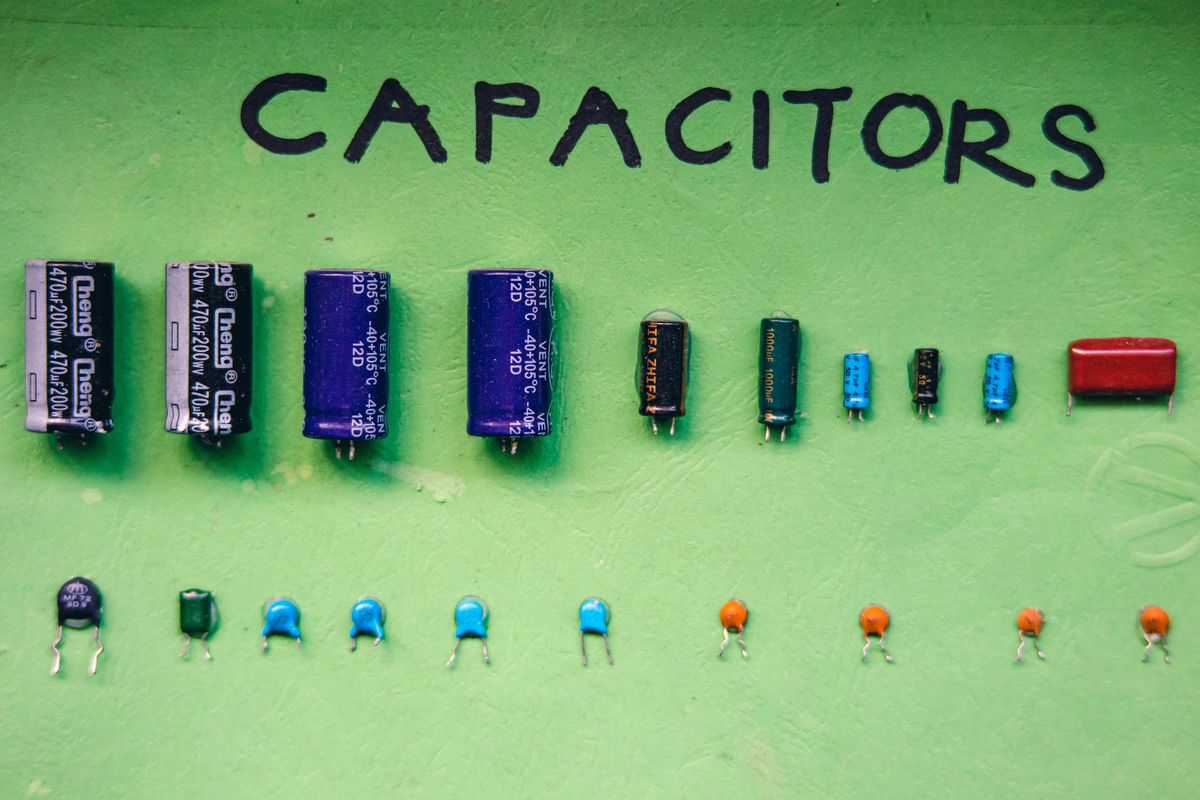
Ceramic disc and monolithic capacitors — the small tan, blue, or orange discs you'll find in almost any electronics kit, guitar pedal, or Arduino project — nearly all use this system. Unlike a resistor's color bands, which you read visually, a capacitor code is printed as actual characters, which makes it feel like it should be less error-prone. In practice, the print is often so small and low-contrast that a "3" and a "4" — or worse, a whole extra digit — are genuinely easy to misread or mis-grab from a parts bin, which is exactly what happened to me.
Key Takeaway
A 3-digit capacitor code encodes two significant digits and a power-of-ten multiplier, always in picofarads. Misreading or swapping the last digit changes the value by a full factor of 10 — the exact same failure mode as a misread resistor multiplier band, just harder to spot because it's printed text, not color.
The Mistake: How a 103 Instead of a 104 Broke My Tone Control
The tone stage on the kit I was building is a simple passive low-pass filter: a fixed resistor feeding into a capacitor to ground, with the tone potentiometer sweeping how much of that filtered signal gets blended back in. The kit called for a 104 — 0.1 µF — paired with a 100kΩ resistor. That combination sets the filter's cutoff frequency, the point above which high frequencies start getting rolled off:
With the correct 104 (0.1 µF): f = 1 / (2π × 100,000Ω × 0.0000001F) ≈ 15.9 Hz — deep enough into the sub-bass that the filter smoothly shapes the entire audible guitar range as you sweep the knob, which is the whole point of a tone control.
With the 103 (0.01 µF) I'd actually soldered in by mistake: f = 1 / (2π × 100,000Ω × 0.00000001F) ≈ 159 Hz — a full decade higher. Nearly the entire guitar frequency range (roughly 80 Hz to 5 kHz for a typical electric guitar signal) sat above that cutoff no matter where the knob was turned, so the filter was essentially always fully engaged. That's why the tone knob felt dead — it was still working exactly as designed, just centered on a frequency so low it couldn't do anything the ear would notice.
⚠️ Note
103 and 104 are two of the most common ceramic capacitor codes you'll ever encounter — 10nF and 100nF respectively — which is exactly why they end up in adjacent parts bags and get mixed up constantly. Always check the third digit specifically before soldering a tone, filter, or timing capacitor into a circuit.
The Capacitor Code Calculator would have caught this in about five seconds — type in "103" and it shows 10,000 pF (10 nF), not the 100,000 pF (100 nF) a 104 gives you, side by side with the pF/nF/µF conversion so a factor-of-10 swap jumps out immediately instead of hiding in the decimal point.
How Do You Read a 3-Digit (EIA-198) Capacitor Code?
The EIA-198 standard encodes a capacitor's value as: two significant digits, followed by a multiplier digit that's a power of ten applied in picofarads. The formula is:
So "104" reads as 10 × 10⁴ = 10 × 10,000 = 100,000 pF, which converts to 100 nF or 0.1 µF — the same value, just expressed at whichever scale reads most naturally. A two-digit code with no multiplier at all (like "22" on a small disc cap) is read directly as picofarads — 22 pF — since values that small don't need a multiplier.
| Multiplier Digit | Multiplier | Example Code → Value |
|---|---|---|
| 0 | ×1 | 220 → 22 pF |
| 1 | ×10 | 221 → 220 pF |
| 2 | ×100 | 222 → 2,200 pF (2.2 nF) |
| 3 | ×1,000 | 103 → 10,000 pF (10 nF) |
| 4 | ×10,000 | 104 → 100,000 pF (0.1 µF) |
| 5 | ×100,000 | 105 → 1,000,000 pF (1 µF) |
A worked example, since one wrong digit is the whole point of this article: the code 473 means 47 × 10³ = 47,000 pF, which is 47 nF (a common tone-stage or coupling cap value). Change only the last digit to 474, and the value jumps to 47 × 10⁴ = 470,000 pF — 470 nF, ten times larger. Same first two digits, ten times the capacitance, from one misread character.
💡 Pro Tip
When a kit's parts list gives you a µF value instead of the printed code (common in guitar pedal and synth DIY forums), flip the Capacitor Code Calculator to "Convert Value → Code" mode, enter the µF value, and it hands you back the exact code to look for on the bag — no manual power-of-ten math needed before you even start sorting parts.
What Is R-Notation and When Do You See It?
R-notation is an alternative capacitor marking used for values under 10 pF, where the letter "R" takes the place of a decimal point. Below 10 pF, a two-digit significant-figure-plus-multiplier scheme runs out of resolution, so manufacturers write the value almost literally instead: "4R7" reads as 4.7 pF, and "R47" reads as 0.47 pF.
You'll mostly run into R-notation on small NP0/C0G capacitors used in oscillator and RF filter circuits — precision timing applications where even a fraction of a picofarad shifts the result. It's less common in general guitar pedal or Arduino-hobbyist work, but worth recognizing on sight so an "R" in the middle of a code doesn't get mistaken for a stray character or a misprint.
What Do the Tolerance Letters (J, K, M) Actually Mean?
A capacitor's tolerance letter is a trailing character after the numeric code that specifies how far the part's real, measured capacitance may legitimately deviate from its nominal (printed) value. A capacitor marked "104K" is nominally 100,000 pF (0.1 µF) with a guaranteed tolerance of ±10% — meaning any part that measures between 90,000 pF and 110,000 pF straight off the reel meets spec; that's normal manufacturing variance, not a defective part.
| Letter | Tolerance | Typical Use |
|---|---|---|
| J | ±5% | General-purpose, tone/coupling caps |
| K | ±10% | General-purpose ceramic (most common) |
| M | ±20% | Bulk/decoupling, non-critical values |
| B / C / D | ±0.1–0.5 pF | Small-value NP0/C0G precision parts |
For a tone or filter capacitor in an audio circuit, a ±10% variance barely registers to the ear. For a timing capacitor in an oscillator, the same ±10% can noticeably shift a frequency — which is why precision timing circuits lean on tighter-tolerance parts (J or better) instead of the general-purpose K-tolerance caps that dominate most parts bins.
Common Capacitor Code Mistakes to Watch For
Beyond the 103-for-104 mix-up that killed my tone control, a few other misreads come up constantly for anyone sorting a parts drawer or building from a kit:
- Confusing a 2-digit direct-read code with a 3-digit coded value. "22" printed alone is 22 pF exactly, with no multiplier applied — reading it as if a third digit were implied inflates the value by orders of magnitude.
- Grabbing the wrong bag from a mixed parts kit. Ceramic caps in the 100 pF–1 µF range are visually near-identical regardless of value; the printed code is the only reliable signal, so it's worth double-checking under bright light before soldering, not after.
- Misreading a faint or worn print under warm workbench lighting. The same low-contrast problem that plagues resistor bands applies here — a "3" and an "8" can blur together on tiny, dimly lit print.
- Assuming R-notation is a misprint. Seeing "4R7" and assuming it should read "47" (which would be 47 pF, ten times larger) is an easy trap if you haven't seen R-notation before.

The most reliable habit, whether you're stuffing a pedal kit, prototyping a filter on a breadboard, or sorting a mixed parts drawer, is to verify the code against a calculator or an LCR meter before it goes anywhere near a tone, filter, or timing stage — those are exactly the circuits where a factor-of-10 error is audible or measurable rather than silently absorbed.
⚠️ Note
If a decoded value looks physically implausible for the part's size — a tiny disc capacitor "coding" to several microfarads, say — trust your instinct. Some manufacturers print very small capacitors' pF values directly rather than coding them, so cross-check against the datasheet or an LCR meter reading before assuming the code is wrong.
Frequently Asked Questions
What does a capacitor code like 104 mean?
"104" means 10 × 10⁴ picofarads = 100,000 pF, which equals 100 nF or 0.1 µF. The first two digits are significant figures and the third digit tells you the power of ten to multiply by, per the EIA-198 standard used on ceramic and film capacitors worldwide.
What's the actual difference between a 103 and a 104 capacitor?
A 103 is 10 × 10³ = 10,000 pF (10 nF), while a 104 is 10 × 10⁴ = 100,000 pF (100 nF / 0.1 µF) — exactly ten times larger. They're two of the most common values in general electronics, which is why they're so easy to grab interchangeably by mistake.
Why does swapping a capacitor value shift a filter's cutoff frequency so much?
In an RC filter, cutoff frequency is inversely proportional to capacitance (f = 1 / (2πRC)), so a 10x change in capacitance produces roughly a 10x change in cutoff frequency — the same relationship that turned my tone control's near-inaudible 15.9 Hz cutoff into a 159 Hz cutoff that sat above almost the entire guitar signal range.
Is R-notation the same thing as a 3-digit code?
No — R-notation is used only for capacitors under 10 pF, where the letter R stands in for a decimal point (e.g. "4R7" = 4.7 pF). The standard 3-digit EIA-198 code with a multiplier is used for capacitors 10 pF and above.
How accurate is a capacitor code calculator?
A calculator applying the EIA-198 standard gives an exact decoded value for any correctly formatted code — the arithmetic itself has zero ambiguity. The one real-world limitation is that a small minority of capacitors print their value directly in pF rather than coding it, so an implausible result for the part's physical size is worth cross-checking against the datasheet.
Try It Yourself
A 103 instead of a 104 doesn't look like a big deal on the parts bag — it's one digit — but in a tone or filter stage it's a full factor-of-10 shift in cutoff frequency, and it's the kind of mistake that hides in "the pedal works, it just sounds wrong" territory instead of announcing itself outright.
Use the Capacitor Code Calculator to decode any 3-digit, 4-digit, or R-notation marking instantly, or flip it around to find the exact code for a µF value from a parts list.
Also worth checking:
- Resistor Color Code Calculator — decode the color bands on the resistor pairing with your capacitor in a filter stage
- LED Resistor Calculator — size a current-limiting resistor correctly before wiring up an indicator LED
- Ohm's Law Calculator — check voltage, current, and resistance relationships anywhere in the circuit