Everyone's Suddenly Obsessed With VO2 Max. Here's Why Your Smartwatch's Number Might Be Wrong
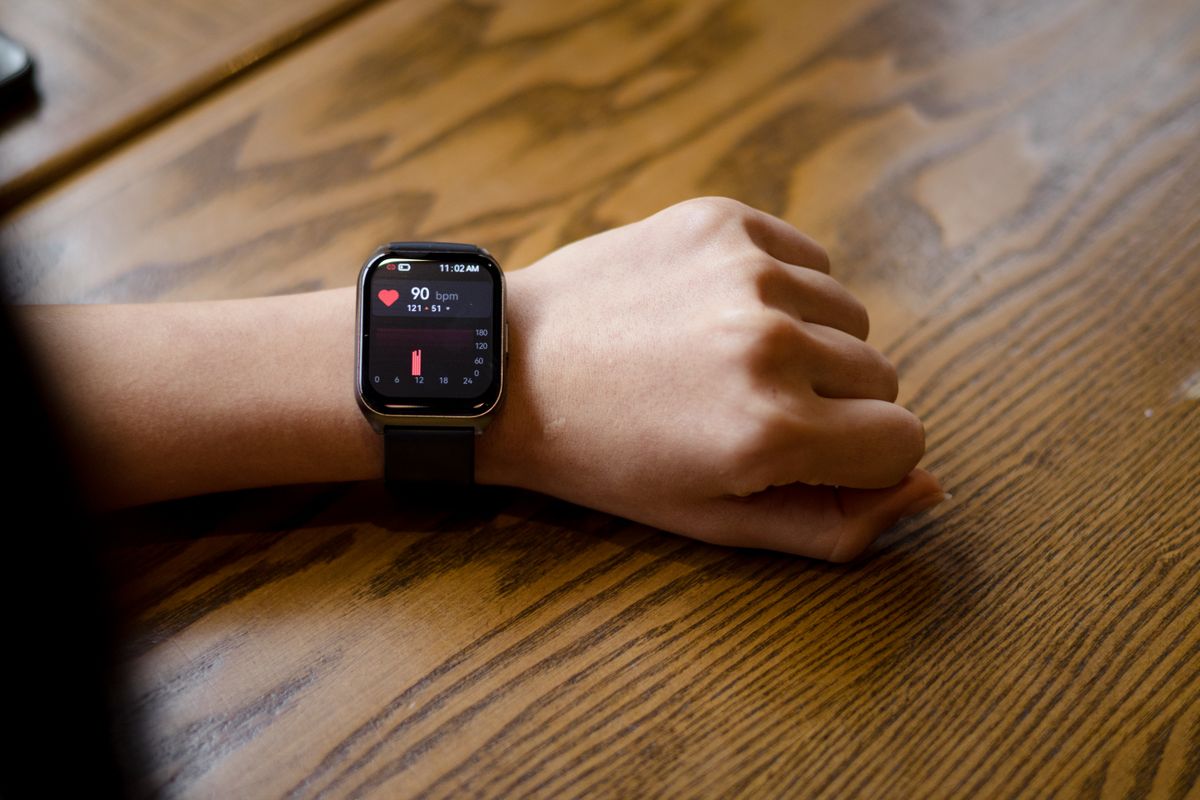
My watch buzzed with a "Cardio Fitness" update one morning: 38 ml/kg/min, flagged "Below Average" for my age and sex. I'd been running three times a week for months. I stared at that number for a solid minute, genuinely annoyed, before deciding to check it the old way — no algorithm, no weeks of passively collected data, just a stopwatch and a track. Twelve minutes later I had a number that told a completely different story: 48. Not below average. Good, by a comfortable margin.
That ten-point gap is exactly why VO2 max has become the metric everyone's arguing about right now. It's showing up on every fitness tracker's home screen, it's the headline biomarker in longevity books and podcasts, and almost nobody checking their score understands how it's actually calculated — or how differently two "VO2 max" numbers on two different devices can land for the same body on the same day. This article covers what VO2 max actually is, the real formulas behind it, why wearable estimates diverge from field tests, and a full worked example so you can see exactly where the numbers come from.
⚠️ Disclaimer
This article is for informational and educational purposes only and does not constitute medical advice. VO2 max estimates from field tests and wearables are approximations, not diagnostic measurements. Consult a doctor before starting a new exercise programme, particularly if you have any cardiovascular history.
What Is VO2 Max and Why Is Everyone Suddenly Talking About It?
VO2 max is the maximum volume of oxygen your body can consume and use per minute during intense exercise, measured in millilitres of oxygen per kilogram of body weight per minute (ml/kg/min). It's widely regarded by exercise physiologists as the single best laboratory indicator of cardiorespiratory fitness — a measure of how efficiently your heart, lungs, and muscles work together under load.
It's not a new metric. Exercise scientists have used it since the 1920s. What's new is who's talking about it. Peter Attia's 2023 book Outlive helped popularise VO2 max among a general audience as a biomarker tied to lifespan, not just race times, and every major wearable brand — Apple, Garmin, Whoop, Fitbit — now surfaces a VO2 max estimate automatically, no lab required. That combination pushed a niche exercise-physiology number into the same conversation as resting heart rate and sleep score.
The interest has real science behind it. The American Heart Association's 2016 scientific statement recommended that cardiorespiratory fitness be assessed as a clinical vital sign alongside blood pressure and cholesterol, citing it as one of the strongest predictors of long-term mortality risk in the research literature. That's a meaningful reason to care about your number — it's also exactly why it's worth understanding where that number actually comes from before you let it change how you feel about your fitness.
Key Takeaway
VO2 max is a genuinely well-validated fitness and longevity marker — but "VO2 max" on your wrist and "VO2 max" from a real test are not the same measurement process, and they can disagree by a wide margin.
How Does Your Smartwatch Actually Estimate VO2 Max?
Wearables don't measure oxygen consumption at all — no consumer device does. They estimate it indirectly from patterns in your pace, heart rate, and GPS data collected during outdoor walks and runs, run through a proprietary algorithm (Garmin's Firstbeat engine and Apple's Cardio Fitness metric are the two most common). The model essentially asks: at this heart rate, how fast were you covering ground? Faster pace at a lower heart rate implies a fitter cardiovascular system, and better implies a higher VO2 max.
The problem is what the algorithm doesn't see. Most of these estimates are calibrated specifically on outdoor walking and running with GPS — they generally don't factor in cycling, swimming, rowing, or indoor treadmill sessions with no GPS signal, and accuracy is documented to improve only after weeks of consistent outdoor data. If your training is mostly indoor, mostly cross-training, or mostly easy zone 2 effort where your pace-to-heart-rate ratio looks conservative, the passive estimate skews low — which is precisely the pattern behind my "Below Average" notification.

⚠️ Note
None of this means your watch is broken — passive VO2 max estimates are still useful for tracking your own trend over months. They're just not the same measurement as a field test or lab test, and treating a single reading as a precise diagnosis is where people go wrong.
How to Calculate VO2 Max Yourself (No Wearable Required)
There are two well-established ways to estimate VO2 max without a lab, and both only need information you can gather yourself.
The Cooper test, developed in 1968 by Dr. Kenneth H. Cooper for the US Air Force, has you run as far as you can in 12 minutes at a genuinely maximal, sustained effort. The distance covered converts directly to an estimate:
The resting heart rate method, based on the Uth–Sørensen–Overgaard–Pedersen formula (2004), needs no maximal effort at all — just your age and your resting pulse, taken first thing in the morning before you get out of bed:
| Method | What It Needs | Best For |
|---|---|---|
| Cooper test | 12-minute maximal run | People who can run hard safely |
| Resting HR | Age + resting pulse | A quick, low-effort estimate |
| Lab test (gas analyzer) | Treadmill + equipment | The most accurate number available |
💡 Pro Tip
Run both formulas and compare. If the Cooper test and the resting HR method land within a few points of each other, that's a good sign your number is close to real — which is exactly what happened when I checked mine.
Rather than doing this arithmetic by hand mid-workout, the VO2 max calculator runs both formulas for you and maps the result straight to a fitness category.
My Watch Said 38. The Track Said 48. Here's the Math.
Here's the actual comparison that started this. I'm 34, resting heart rate 58 bpm. The morning after my watch's "Below Average" alert, I ran a genuine 12-minute maximal effort on a track and covered 2.65 km (about 1.65 miles).
Cooper test: 2.65 km = 2,650 meters. (2,650 − 504.9) / 44.73 = 47.96, rounding to 48.0 ml/kg/min.
Resting HR method: Estimated HRmax = 220 − 34 = 186. 15 × (186 / 58) = 15 × 3.207 = 48.1, so 48.1 ml/kg/min.
Both independent methods agreed almost exactly — 48.0 and 48.1 — while my watch's passively collected estimate sat ten full points lower at 38. That's the difference between a "Below Average" label and a solidly "Good" one on the same body, in the same week.

| Source | Estimated VO2 Max | Category |
|---|---|---|
| Smartwatch (passive) | 38 ml/kg/min | Below Average |
| Cooper test | 48.0 ml/kg/min | Good |
| Resting HR formula | 48.1 ml/kg/min | Good |
This isn't a case against wearables generally — it's a case for treating any single VO2 max reading, from any source, as an estimate to be checked, not a verdict to be accepted. My gap traced back to months of indoor treadmill runs the algorithm couldn't see well; yours might come from a different blind spot entirely.
What's a Good VO2 Max for Your Age?
VO2 max naturally declines with age — roughly 1% per year after your late twenties for people who don't train specifically to counter it — and tends to run higher in people who train aerobically. The categories below are the general adult norms used by the VO2 max calculator on this site:
| Category | Range (ml/kg/min) |
|---|---|
| Poor | Below 25 |
| Fair | 25 – 33 |
| Average | 34 – 42 |
| Good | 43 – 51 |
| Excellent | 52 – 59 |
| Superior | 60 and above |
Elite endurance athletes — professional cyclists, cross-country skiers, marathoners — regularly post scores above 60 ml/kg/min, with some recorded lab values exceeding 80. That's the far end of a very wide human range, not a target most recreational exercisers need to chase.

How to Actually Raise Your VO2 Max
- Add real interval work. Short, hard efforts — think 4 x 4-minute intervals near maximal effort with recovery between — produce some of the fastest documented VO2 max gains in the exercise science literature.
- Build an aerobic base. Consistent easy-effort sessions (the heart rate zones calculator can help you find true zone 2) develop the cardiovascular groundwork that interval training builds on top of.
- Cross-train deliberately. Cycling, swimming, and rowing all raise VO2 max — but remember your wearable may undercount that progress if its estimate only trusts outdoor running data.
- Retest the same way each time. Whether you use the Cooper test or the resting HR method, keep the conditions consistent — same course, same effort level, same time of day — so you're tracking a real trend and not test-to-test noise.
- Give it real time. Measurable improvement typically takes six to eight weeks of consistent training combining both easy aerobic work and genuine high-intensity intervals.
Key Takeaway
VO2 max responds to training the same way regardless of which number you started from. Chase the trend over weeks, not the single score your watch shows you this morning.
Frequently Asked Questions
What is a good VO2 max for my age?
It varies by age and sex, but for most adults a score of 43–51 ml/kg/min is considered Good, and 52 and above is Excellent to Superior. VO2 max declines gradually with age, so norms shift lower for older adults — the [VO2 max calculator](/calculators/health/vo2-max) maps your result to the correct category automatically.
Why does my smartwatch's VO2 max number keep changing?
Wearable estimates update as they gather more pace and heart rate data from your outdoor walks and runs, so the number can shift week to week based on your recent training pattern — not necessarily your underlying fitness. A sudden drop often reflects a change in the type of exercise you've been doing (more indoor cycling, less outdoor running), not an actual fitness decline.
Is the Cooper test accurate?
It's one of the most widely used field estimates in exercise science and correlates reasonably well with lab measurements when performed at genuine maximal effort. It's less accurate for people who pace poorly during the 12 minutes or who aren't used to running hard, since the formula assumes a true maximal effort.
Can I improve my VO2 max without running?
Yes. VO2 max reflects your cardiovascular system's overall capacity, so cycling, swimming, rowing, and other aerobic modalities all raise it through the same interval-and-base-building principles as running. Just be aware a running-calibrated wearable estimate may lag behind your real progress if you switch modalities.
How much can VO2 max actually improve?
Studies on structured training programmes commonly show gains of 10–20% over several months in previously untrained or moderately trained adults, with most people seeing measurable movement within six to eight weeks of consistent aerobic and interval training.
Try It Yourself
VO2 max is one of the most useful fitness numbers you can track — but only if you know which measurement you're actually looking at. Run the Cooper test or the resting heart rate method yourself and compare it against whatever your wearable is telling you.
Use the VO2 Max Calculator to get an instant estimate from either method. Then check your true training zones with the heart rate zones calculator, dial in your easy-effort pace with the pace training zones calculator, or see where your running splits stand with the running pace calculator.