The 'Fat-Burning Zone' Is a Myth — Here's What Your Heart Rate Zones Actually Mean
For about four months, I kept my treadmill locked on "Fat Burn" mode. Slow, steady, chatting-pace walking-jog, watching the little flame icon glow on the console the whole time. I lost almost nothing. Meanwhile a friend who did three 20-minute sweat-through-your-shirt sessions a week dropped visible body fat in half the time. The treadmill wasn't lying, exactly — it just wasn't telling me the part that mattered.
That "fat-burning zone" you've seen on every cardio machine since the 1990s is Zone 2 heart rate training, and the marketing around it is one of the most persistent bits of fitness misinformation still in circulation. It's not wrong, but it's incomplete in a way that's cost a lot of people a lot of wasted treadmill hours.
The "Fat-Burning Zone" Myth, Explained
The "fat-burning zone" is Zone 2 heart rate training — roughly 60–70% of your maximum heart rate — at which a higher percentage of the calories you burn come from fat rather than carbohydrate. That part is genuinely true and backed by exercise physiology going back decades. The myth is what gets left out: percentage isn't the same as total.
Here's the arithmetic that machine displays never show you. At Zone 2 intensity, your body might burn roughly 60% fat, 40% carbohydrate, for a total of 300 calories over 30 minutes — about 180 fat calories. Push into Zone 4 for the same 30 minutes and the fuel mix shifts to maybe 35% fat, 65% carbohydrate, but total burn jumps to 450 calories — about 158 fat calories, plus 270 more calories burned overall, plus an elevated metabolic rate for hours afterward (the "afterburn effect," or EPOC).
Key Takeaway
Higher-intensity exercise burns a lower percentage of calories from fat but a higher total number of calories — including fat calories — in the same amount of time. For fat loss specifically, total energy expenditure over the week matters more than which fuel source was technically dominant during any single workout.
None of this means Zone 2 is useless — it's the opposite. Zone 2 builds the aerobic base (mitochondrial density, capillary growth, cardiac efficiency) that makes every other zone possible. The mistake is treating it as the only zone that "counts" for fat loss, which is exactly what decades of "Fat Burn" buttons on gym equipment trained an entire generation to believe.
How Heart Rate Zones Are Actually Calculated
There are two common ways to work out your personal zones, and they give meaningfully different numbers.
Method 1 — the age-based formula. The simplest and most widely used estimate for maximum heart rate (MHR) is:
For a 40-year-old, that's 220 − 40 = 180 bpm. Each zone is then a straight percentage band of that number.
Method 2 — the Karvonen (Heart Rate Reserve) formula. Developed by Finnish physiologist Martti Karvonen in 1957, this method factors in your resting heart rate (RHR) as well, which makes it more personalised — two 40-year-olds with the same MHR but very different fitness levels will get different training targets:
Worked example for that same 40-year-old, assuming a resting heart rate of 62 bpm (measured first thing in the morning, before getting out of bed) and wanting the top of Zone 2 (70%):
- Heart rate reserve = 180 − 62 = 118
- Target = (118 × 0.70) + 62 = 82.6 + 62 = 144.6 bpm (Karvonen)
- Versus the simple method: 180 × 0.70 = 126 bpm (age-based)
That's an 18-beat gap — the difference between an easy jog and a genuine tempo effort. The fitter your resting heart rate, the bigger that gap gets, which is why serious athletes almost always train off Karvonen rather than the flat percentage.
| Method | Formula | Accounts for fitness? | Best for |
|---|---|---|---|
| Age-based | 220 − age, then % | No | Quick estimate, casual training |
| Karvonen (HRR) | ((MHR−RHR)×%) + RHR | Yes | Structured training, tracking fitness gains |
The Heart Rate Zones Calculator runs both formulas automatically — enter your age (or a measured max HR) and resting heart rate, and it returns all five zones in bpm, so you're not doing this arithmetic mid-workout.
What Each Zone (Z1–Z5) Is Actually For
Five zones, five distinct physiological jobs. None is "better" — they're tools for different outcomes.
| Zone | % of MHR | Feels like | Trains |
|---|---|---|---|
| Zone 1 | 50–60% | Effortless, can sing | Recovery, warm-up |
| Zone 2 | 60–70% | Easy, full sentences | Aerobic base, fat oxidation |
| Zone 3 | 70–80% | Comfortably hard | Aerobic capacity, tempo |
| Zone 4 | 80–90% | Hard, short phrases only | Lactate threshold, race pace |
| Zone 5 | 90–100% | Maximal, can't talk | VO2 max, peak power |
Zone 2 deserves the reputation it has for sustainable fat loss because you can do a lot of it without wrecking your recovery — 45–60 minutes, most days, without accumulating the fatigue that high-intensity work does. Zone 4–5 deserves credit for burning more total calories per minute and for the after-the-fact metabolic boost. The two aren't in competition; they're complementary, and cardiovascular research consistently shows the biggest fitness and body-composition gains come from a mix, not either extreme alone.
💡 Pro Tip
If you only have time for one weekly benchmark, track "pace or power at a fixed heart rate" rather than weight on the scale. Running the same route at the same Zone 2 heart rate but finishing faster over 8–12 weeks is one of the clearest, least noisy signals that your aerobic fitness — and your fat-burning efficiency — is genuinely improving.
A Week of Zone-Based Training That Works
Here's a structure that respects both halves of the myth — the volume Zone 2 provides and the total-burn advantage of higher intensities — without over-training either:
- 3× Zone 2 sessions (40–60 min): brisk walk, easy jog, or steady cycling. Conversational the entire time. This is your volume base.
- 1× Zone 4 interval session (20–25 min): 6–8 rounds of 2–3 minutes hard, 1–2 minutes easy recovery between. This is where most of your total calorie burn per minute happens.
- 1× Zone 5 session (15 min, optional, once base fitness is established): 20–30 second all-out efforts with full recovery. Short, effective, demanding — cap it at once a week.
- 1–2 full rest or Zone 1 active recovery days.

Someone burning roughly 300 calories per 45-minute Zone 2 session and 450 calories per 25-minute Zone 4 interval session, following the structure above, nets out to roughly 900 (Zone 2) + 450 (Zone 4) + 200 (Zone 5) = 1,550 calories across the week from cardio alone — on top of the resting metabolic baseline your body burns just existing. For context on that baseline, the BMR Calculator estimates how many calories you burn at rest, and the Calories Burned Calculator breaks down expenditure for dozens of specific activities and durations.

If you're building toward a specific event rather than general fat loss, the Running Pace Calculator and VO2 Max Calculator both pair naturally with zone training — pace tells you how fast, VO2 max tells you your aerobic ceiling, and heart rate zones tell you how hard any given effort actually is on a given day.
When the Number Lies to You
Heart rate isn't a perfect instrument, and treating any single reading as gospel causes its own problems.
Cardiac drift is a well-documented phenomenon where heart rate creeps upward over a long steady-state session even though your pace and effort haven't changed — driven by rising core temperature and dehydration, not declining fitness. On a hot day, your Zone 2 heart rate might read like Zone 3 by the 40-minute mark. That's not a sign to push harder; it's a sign the number needs context.
⚠️ Note
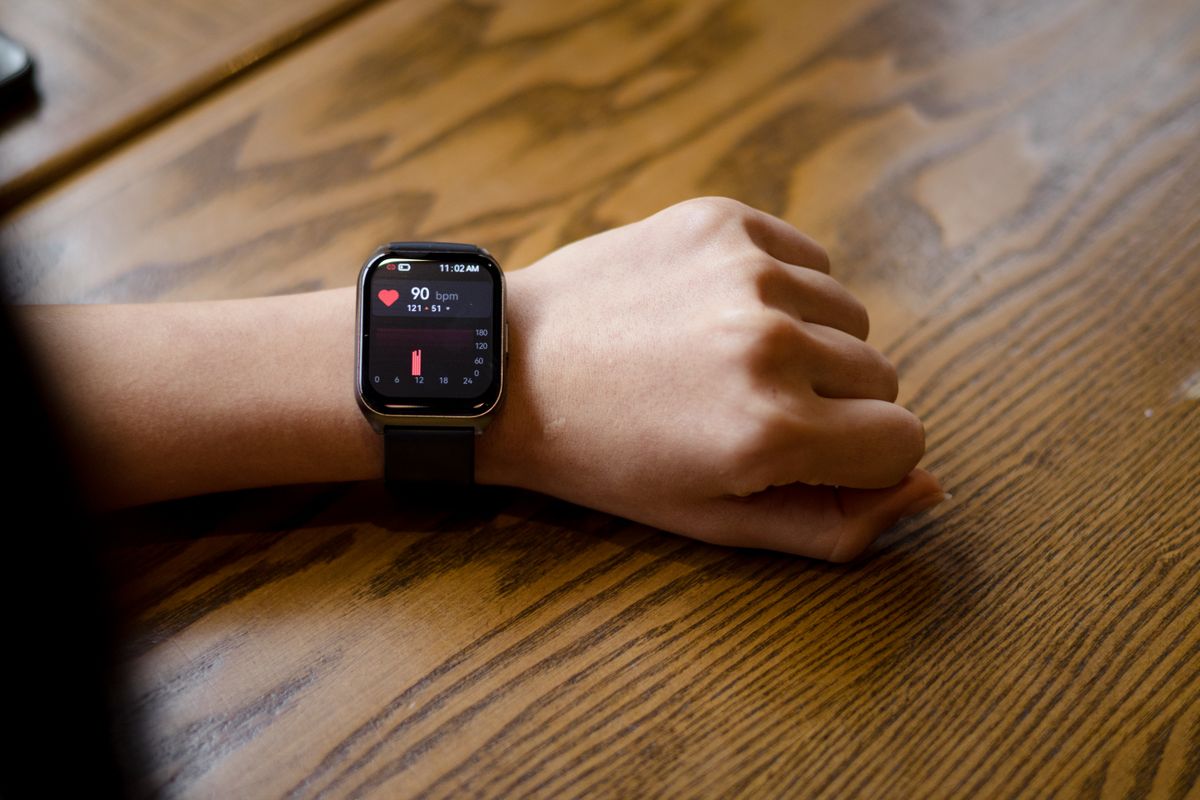
Wrist-based optical heart rate sensors on smartwatches can lag by several seconds during rapid intensity changes and are more prone to error during activities with a lot of wrist movement (lifting, rowing, boxing). A chest strap monitor, which reads electrical activity directly rather than optically through blood flow, gives more accurate real-time data — worth the investment if you're training zones seriously rather than casually.

Medications (particularly beta-blockers), caffeine, poor sleep, illness, and stress can all shift your heart rate at a given effort by 10–15 bpm in either direction on any given day. If a session feels unusually hard at a heart rate that's normally easy, or your resting heart rate is elevated by 5+ bpm from your usual baseline, that's frequently your body flagging incomplete recovery — worth listening to over the number on the display.

Frequently Asked Questions
Is the fat-burning zone actually good for anything?
Yes — Zone 2 training is genuinely valuable. It builds your aerobic base, is sustainable for long durations without heavy recovery demands, and does burn a higher percentage of calories from fat. The myth isn't that Zone 2 is useless; it's the marketing implication that it's the *only* zone that matters for fat loss, when total weekly calorie expenditure across all zones is what actually drives results.
Should I use 220-minus-age or the Karvonen formula?
Use Karvonen if you know your resting heart rate and want personalised, more accurate zones — it's the standard for structured or competitive training. The 220-minus-age formula is fine for a quick, casual estimate but has a standard deviation of roughly ±10–12 bpm across individuals, meaning it can be meaningfully wrong for any one person. If you have access to a measured max heart rate (from a fitness test or observed peak during hard effort), that beats either formula's estimate.
How do I find my resting heart rate accurately?
Measure it first thing in the morning, before getting out of bed, ideally for 2–3 mornings and averaging the results (a single reading can be skewed by how you slept or a vivid dream). A chest strap or a smartwatch with continuous heart rate tracking overnight will do this automatically. Most healthy adults fall between 60–80 bpm; well-trained endurance athletes are often 40–55 bpm.
Can I train by heart rate zones without a smartwatch or chest strap?
Yes, with the "talk test" as a reasonable proxy. Zone 1–2: you can hold a full conversation. Zone 3: you can speak in short phrases but not a full sentence. Zone 4: you can manage only a word or two at a time. Zone 5: you can't talk at all. It's less precise than a measured heart rate but is a legitimate, free way to gauge intensity, especially for beginners still building the habit.
How often should zone-based training change as I get fitter?
Recalculate your zones every 8–12 weeks, or sooner if your resting heart rate drops noticeably (a common sign of improving cardiovascular fitness). Because the Karvonen method uses your resting heart rate directly, your target bpm for each zone will naturally shift downward as fitness improves — the same subjective effort produces a lower heart rate over time, which is exactly the adaptation you're training for.
Try It Yourself
The fat-burning zone isn't a myth in the sense of being wrong — it's a myth in the sense of being marketed as the whole story when it's one useful piece of a bigger picture. Use the Heart Rate Zones Calculator to get your personal Zone 1–5 targets from both the age-based and Karvonen methods, then pair it with the Calories Burned Calculator to see how total weekly expenditure — not just which zone you trained in — is what actually moves the needle.


